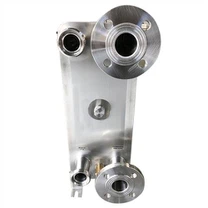
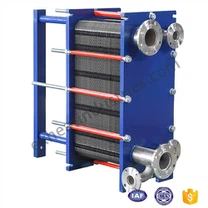
Plate heat exchanger
Plate heat exchanger is a heat transfer equipment with high heat transfer efficiency, small footprint, easy installation and use, light weight, low fouling factor and compact structure. However, due to the limitations of its own structure, the use of removable plate heat exchanger pressure does not exceed 2.5MPa, the use of temperature does not exceed 250 ℃, and there are corrosive media and sealing gasket corrosion problems.
1, The plate heat exchanger corrosion cause
(1) The selection of materials for heat exchangers: heat exchanger key selection of carbon steel, stainless steel plate, titanium plate, SMO254, Hastelloy and other metal materials, for different substances to choose the corresponding corrosion-resistant metal materials, raw materials selected unreasonably will intensify corrosion, more serious harm to the use of heat exchangers term.
(2) Temperature corrosion is a chemical change, there are materials that show that each raise the temperature 10 ℃, the corrosion rate of about 1-3 times higher. But there are force majeure events, when the temperature can reduce the function of other elements of corrosion, the temperature of corrosion hazards will also be reduced.
(3) The substance in a certain content of toxic residues (such as chloride ion content, sulfur ions, ammonia positive ions, etc.) of long-term touch, in some cases will cause more serious corrosion.
(4) The content of the substance on the heat exchanger corrosion hazards are not the same. In dilute hydrochloric acid, the greater the concentration value of corrosion is more serious. And carbon steel or stainless steel plate in the content of 50% up and down the most serious corrosion of concentrated hydrochloric acid, and when the content is increased to 60% above, corrosion in turn plummeted.
(5) PH value of metal materials corrosion is also a certain amount of harm.
2, In the heat transfer system software material, the type of plate heat exchanger corrosion
(1)uniform corrosion of the metal surface layer touching the medium all or most of them are corroded, resulting in uniform thinning of metal materials, and eventually destroyed.
(2)crevice corrosion so that part of the metal surface of the oxide film destruction, producing specifications less than 1mm of broken holes or corrosion pits.
(3)Interstitial corrosion is caused at the interstices of metal parts because of the photoelectric catalytic imbalance of the residual material. The key is produced in the edge of the plate and sealing fastening edge.
(4)Ground stress corrosion of internal stress, external forces and corrosion under the synergistic effect of the formation of cracking, cracking is the source of corrosion of ground stress corrosion.
(5) Damage to the metal surface layer of corrosive substances at the same time there is damage and corrosion of the destruction. This type of corrosion key produced in the plate or pipe channel or diversion location.
3, Plate heat exchanger anti-corrosion way
(1) Taking into account the ability of metal materials to resist material corrosion, the appropriate choice of raw materials for heat exchangers.
(2) In the metal surface to carry out stainless steel passivation, so that the surface layer of air oxide film into a layer of God long dense and very thin film, get faster corrosion resistance.
(3) The use of appropriate and effective heat exchanger structure and all normal flow rate, to ease the corrosion of the entrance.
(4) The use of effective gasket materials and gasket adhesives.
(5) In the corrosive material, you can add the right amount of desulfurization agent, can make the corrosion characteristics of the alloy significantly reduced. However, the addition of desulfurization agent can not endanger the production process and product quality.