Plate Heat Exchanger Spare Parts Introduction
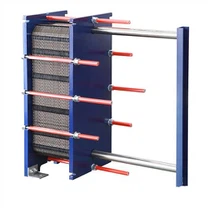
Plate heat exchangers are widely used in industrial processes and HVAC systems, and they consist of various components that work together to transfer heat between two fluids. In this article, we will introduce the key parts of a plate heat exchanger, including the plate corrugation, gasket characters and others.
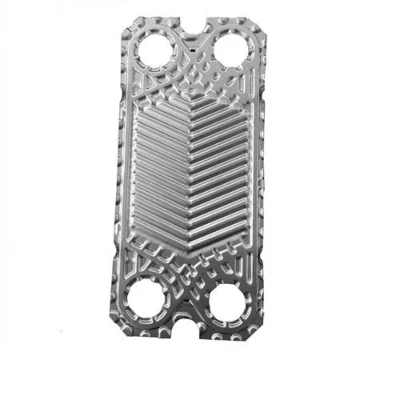
Plate - The plate is the main component of a plate heat exchanger, and it is typically made of stainless steel, titanium, or other corrosion-resistant materials. The plates are designed with a series of channels where the fluids flow through, and they has different thicknesses and corrugations.
Plate Corrugation - The corrugation is the wavy pattern on the surface of the plates, and it creates turbulence in the flow of fluids to enhance heat transfer. The corrugation can also increase the mechanical strength of the plates, making them less susceptible to damage from pressure or vibration.normally they are called high theta and low theta , sometimes, we call it Horizontal and vertical wave.
Gasket - The gasket is a seal that sits between the plates to prevent the fluids from mixing or leaking. The gaskets can be made of various materials, such as EPDM, NBR, or Viton, and they come in different shapes and thicknesses to suit different applications. there are also many different types of gasket, such clip on ,glue, sonderlock, paraclip, hang on type.
Frame - The frame is the support structure that holds the plates and gaskets in place. The frame can be made of stainless steel or other materials, and it is designed to withstand high pressures and temperatures.
Connections - The connections are the ports on the frame where the fluids enter and exit the heat exchanger. The connections can be designed to match various piping configurations, and they can be threaded, flanged, or welded.
Overall, plate heat exchangers offer many advantages over other heat transfer technologies, including high efficiency, compact size, and easy maintenance. By understanding the key components of a plate heat exchanger, you can choose the right equipment and optimize its performance for your specific needs.
Shanghai Exheat Industries Co., Ltd
+86-13545529361
 Language
- English
- Português
- Srbija jezik (latinica)
- slovenščina
- Español
- Français
- Cymraeg
- Gaeilgenah Éireann
- suomi
- Polski
- اردو
- Svenska
- عربي
- Nederlands
- Norsk
- íslenska
- Indonesia
- ไทย
- русский
- हिंदी
- slovenčina
- Català
- українська
- فارسی
- Български
- 한국어
- Bai Miaowen
- Türkçe
- Italiano
- বাংলা
- Lietuvių
- dansk
- O'zbek
- Deutsch
- Malti
- Eesti
- Việt Nam
- Čeština
- 日本語
- עברית
- Kreyòl Ayisyen
- bosanski
- magyar
- România limbi
- Latviešu
- hrvatski
- Melayu
- Ελληνικά