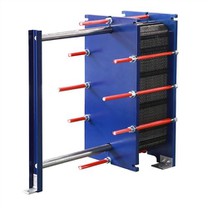
Wide flow channel plate heat exchanger is widely used in many industrial and civil fields because of its larger flow channel space, which makes the fluid flow smoother. However, as with all mechanical equipment, wide-flow plate heat exchangers may encounter wear and tear, leakage, clogging and other problems during long-term operation, which may shorten the service life of the equipment if not dealt with in a timely manner. Therefore, it is very important to understand and implement correct repair and maintenance measures.
Key points for repair and maintenance of wide-flow channel plate heat exchangers:
1. Regular inspection: Regularly inspect the heat exchanger, including observing whether there is any deformation, damage or dirt accumulation on the plates, and whether the gasket is intact.
2. Cleaning and maintenance: According to the fluid characteristics, regular cleaning is carried out to remove the dirt and microbial deposits between the plates. When cleaning, choose a suitable cleaning agent to avoid damage to the plates and gaskets.
3. Gasket Replacement: Replace the gasket periodically to ensure sealing performance. When replacing, pay attention to the material and installation method of the gasket to prevent leakage.
4. Clamping bolt inspection: Check the tightening status of the clamping bolt to ensure that the plate is firmly fixed and to prevent performance degradation due to loosening.
5. Anti-corrosion measures: For different fluids, take corresponding anti-corrosion measures, such as using anti-corrosion materials and adding anti-corrosion agents.
6. Operation training: Train operators to ensure that they understand the correct operation methods and maintenance knowledge of the equipment.
7. Emergency plan: Develop an emergency plan to deal with possible emergencies such as leakage and blockage.
8. Technology update: With the development of technology, keep abreast of and introduce new repair and maintenance techniques to improve the performance and life of the heat exchanger.
Through the above repair and maintenance measures, the service life of the wide-flow channel plate heat exchanger can be effectively extended to ensure that it maintains a good operating condition over a longer period of time. At the same time, this can also reduce the operating costs of the equipment, improve the efficiency of heat transfer, for enterprises or individual users to provide more economical and efficient heat transfer solutions.
For the leakage problem of wide-flow channel plate heat exchanger, the proposed repair and maintenance methods are as follows:
1. Determine the location of the leak: first of all, the heat exchanger pressure test to determine the exact location of the leak.
2. Obvious leakage point repair: If the leakage position is obvious, you can use sandblasting and polishing after argon arc welding welding method for repair.
3. Not obvious leakage point sealing: If you can not determine the specific location of the leakage point, you can consider the following blocking programme:
Solution 1: the leakage of material and liquid channels using welding or adhesive methods for comprehensive blocking. The disadvantage of this method is that the flow channel will fail completely.
Solution 2: Before the heat exchanger is put into operation, install a U-shaped protective sleeve in the direction of the material flow. The advantage of this method is that it is easy to dismantle and install, and it can better protect the welded joints on the material side, but the disadvantage is that it needs to increase the inspection cycle of the equipment.
Solution 3: Add sealing strips to the column support of the water-side channel and seal it by means of pressure plugging. The advantage of this solution is that roughly only one-fifth of the flow channel is blocked, but the disadvantage is that the water channel gap is only 6mm wide, but the depth is very deep and cannot be cleaned.
Solution 4: Before the heat exchanger is put into operation, the material side is equipped with wear-resistant materials to prevent leakage.
The above are some common repair and maintenance methods for wide flow channel plate heat exchanger leakage problems. In practice, the most appropriate blocking programme should be selected according to the specific circumstances, and regular repair and maintenance to ensure the normal operation of the heat exchanger and extend its service life. At the same time, it is also necessary to train operators to ensure that they understand the correct operating methods and maintenance knowledge of the equipment to reduce the occurrence of leaks and other failures.