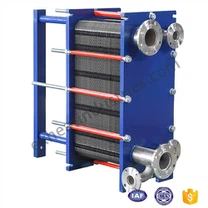
Corrosion-resistant heat exchanger means that the heat exchanger is more resistant to corrosion of the medium in the heat transfer. Generally speaking, the corrosion-resistant heat exchanger will be applied to the more complex conditions of the environment. Like waste steam and wastewater treatment, chemical industry, iron and steel industry, shipping industry and other fields are more widely used. Let's take a look at the types of corrosion-resistant heat exchangers.
1, carbon steel heat exchanger
Carbon steel is an iron-carbon alloy with a carbon content of less than 2.11 per cent, which is what we call carbon steel. Its high hardness, high quality, low plasticity, is a typical "over steel easy to fold", easier to rust, corrosion resistance in general, carbon steel heat exchanger has been gradually replaced.
2, 304-316 stainless steel heat exchanger
Stainless steel heat exchanger is currently on the market more common corrosion-resistant heat exchanger, stainless steel contains stainless steel element - chromium, so that the surface of the formation of a layer of oxidised film, that is, we often refer to as passivation film. Passivation film is not easily dissolved in ordinary acids, alkalis, salts and other media, in general, the cl ion content does not exceed 400mg/l temperature within 130, 316 stainless steel can be used chlorine. Ion content does not exceed 100mg/l, temperature within 120 can choose 304 stainless steel.
If the medium cl ion content exceeds 400mg/l within 1000mg/l, temperature within 130, you can also choose 904L super austenitic stainless steel heat exchanger. 904L super austenitic stainless steel has a very good activation - passivation transformation ability, excellent corrosion resistance. At the same time, it has good resistance to crevice corrosion and stress corrosion resistance.
If the chloride ion content is more than 1800mg/l, less than 5000mg/l, temperature within 130, we can also choose 254SMO advanced stainless steel heat exchanger. 254SMO advanced stainless steel is an ultra-low carbon special stainless steel, with good resistance to chloride pitting and crevice corrosion resistance.
3, titanium heat exchanger
Titanium heat exchanger is a very high corrosion resistance heat exchanger, titanium heat exchanger selection of high-quality titanium plate, in the physical properties, titanium has a light weight, superior mechanical properties and other advantages. In chemical properties, titanium has good stability, in many industrial solutions have good corrosion resistance. Generally speaking, the concentration of chloride ions in 5000mg/l to 7000mg/l can choose TA1. If the working conditions are complex, you can also choose titanium alloy and other materials.
In summary, corrosion-resistant heat exchanger mainly depends on the heat exchanger material selection, there are many friends of the heat exchanger corrosion resistance is likely to be poor, in the purchase of heat exchangers did not choose the right manufacturer, heat exchanger selection and selection of unprofessional lead. Defu heat exchanger equipment, focusing on heat exchanger research and development, production and installation sales. If your heat exchanger corrosion resistance is poor may wish to Baidu DEFU heat exchanger equipment, try our products and services, look forward to working with you.