Pressure Factor
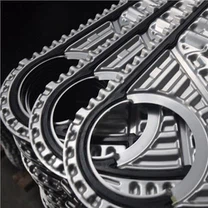
Li Ming first considered the effect of pressure on plate thickness. According to industry experience, when the conventional working pressure is below 1.0Mpa, the plate thickness is usually 0.5mm. However, the operating pressure required by the customer is as high as 1.5Mpa, which means that a 0.5mm plate may deform or even leak due to excessive pressure. Li Ming decided to increase the plate thickness to 0.6mm to cope with the high-pressure environment. Temperature factor Next, Li Ming analyzed the impact of temperature. The design temperature required by the customer is 180°C, which is far higher than the design temperature of conventional plate heat exchangers (usually no more than 150°C). In a high temperature environment, a 0.6mm plate may still not meet the needs of long-term stable operation. Li Ming consulted relevant information and found that for high temperature and high pressure conditions, it is usually necessary to select a fully welded heat exchanger with a plate thickness of up to 1mm. However, this design will significantly increase costs and may reduce heat exchange efficiency. Corrosion factors
Finally, Li Ming considered the corrosiveness of the medium. The medium used by the customer is a strong acid, which puts higher requirements on the corrosion resistance of the plate. Under ordinary water-water, oil-water, and steam-water conditions, a plate thickness of 0.5mm is sufficient to meet the needs, but in a strong acid environment, a 0.5mm plate may be corroded quickly. Li Ming decided to increase the plate thickness to 0.7mm and select a more corrosion-resistant material to extend the service life of the equipment. After comprehensive consideration, Li Ming proposed a compromise solution: use a plate thickness of 0.6mm and add a layer of high-temperature and corrosion-resistant coating on the surface of the plate. This not only ensures the strength and corrosion resistance of the equipment, but also takes into account the heat exchange efficiency. The new design was recognized by the customer. However, when he submitted the design to the customer, the customer questioned: "Can the 0.6mm plate remain stable in long-term operation? We don't want to change equipment frequently." Li Ming realized that relying solely on theoretical calculations and simulations was not enough. He decided to conduct actual tests and made several plate samples of different thicknesses, which were tested at high temperature and high pressure in the laboratory. The results showed that the 0.6mm plate performed well in short-term tests, but showed slight deformation in long-term tests. In order to further optimize the design, Li Ming decided to adopt the idea of composite materials. He added a layer of high-temperature resistant coating on the surface of the 0.6mm plate, which not only improved the strength but also maintained the heat exchange efficiency. Finally, after many tests and improvements, the new design was recognized by the customer. A few months later, the new generation of plate heat exchangers was put into use in the chemical plant, and the operating results far exceeded expectations. Standing in the workshop, Li Ming looked at the equipment running normally, and felt a sense of accomplishment. He knew that this success was not only due to the selection of the appropriate plate thickness, but also to the solution of practical problems through systematic analysis and improvement.
Shanghai Exheat Industries Co., Ltd
+86-13545529361
 Language
- English
- Português
- Srbija jezik (latinica)
- slovenščina
- Español
- Français
- Cymraeg
- Gaeilgenah Éireann
- suomi
- Polski
- اردو
- Svenska
- عربي
- Nederlands
- Norsk
- íslenska
- Indonesia
- ไทย
- русский
- हिंदी
- slovenčina
- Català
- українська
- فارسی
- Български
- 한국어
- Bai Miaowen
- Türkçe
- Italiano
- বাংলা
- Lietuvių
- dansk
- O'zbek
- Deutsch
- Malti
- Eesti
- Việt Nam
- Čeština
- 日本語
- עברית
- Kreyòl Ayisyen
- bosanski
- magyar
- România limbi
- Latviešu
- hrvatski
- Melayu
- Ελληνικά