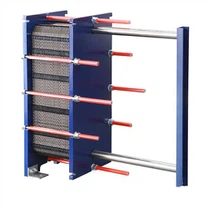
First of all, if you choose the right tools, you will have half the problems! Among many tools, it is very important to choose the right torque wrench. Just like selecting athletes, only those who are professional and strong can perform well in the arena. Big brands like SATA and Stanley, which are well-known in the tool industry, produce torque wrenches that are like well-trained elite athletes. Take a preset torque wrench from SATA, for example. Its accuracy can reach an amazing ±3%, which means that when applying torque, it is like a precise navigator, which can accurately control the force within the appropriate range and greatly reduce the risk of uneven torque. If you choose a wrench with poor accuracy, it would be like letting a person with a very poor sense of direction lead the way, and the result would definitely be a mess. So before using it, you must carefully check whether the accuracy of the torque wrench meets the standard, just like checking the equipment of soldiers. If there is a deviation, you must calibrate or repair it quickly, and never let it "go into battle with illness." Correct operation method With good tools, you also need the correct operation method, just like having a good sword and good swordsmanship. Operators must undergo professional training and be familiar with the tightening "moves" and torque requirements of plate heat exchangers. When tightening, the diagonal tightening method is a "secret". Imagine that the plate heat exchanger is like a chessboard. We have to start from the center, the "key stronghold", and tighten the bolts symmetrically to the edge in sequence, just like playing chess, so that each bolt can be evenly stressed. For example, for the common rectangular plate heat exchanger, first tighten the bolts in the center, and then tighten the bolts diagonally with it like spreading two wings, and gradually expand the "territory" outward. Moreover, when tightening, you can't use force like a bull, but strictly control the torque increment each time. This is like refueling a car. You can't fill it up all at once, but you have to do it little by little. According to the equipment manual and actual working conditions, it is best not to exceed 20% of the specified torque each time, so that you can take steady steps and ensure that each bolt can evenly bear the appropriate torque. Preparation work must not be sloppy Before formal tightening, there is a series of preparation work that cannot be sloppy, which is the "prelude" to success. Check carefully whether the plate of the plate heat exchanger is installed flat and aligned, and whether the sealing gasket is installed correctly and intact, just like checking a work of art. If the plate is deformed, it is like building a house with a crooked foundation, and it is difficult to ensure stability no matter how hard you try in the future; if the sealing gasket is not installed properly, it is like the window is not closed properly, and it is only a matter of time before it leaks. Once it is found that the plate is a little "crooked", it must be repaired or replaced in time; for the sealing gasket, it is necessary to ensure that the material is suitable, and there should be no "small flaws" such as wrinkles and offsets during installation. In addition, the threaded parts of the bolts and nuts must also be cleaned, and the "troublemakers" such as oil stains and impurities must be driven away, otherwise they will be like stumbling blocks on the road, affecting the accuracy of torque transmission. You can use special thread cleaners and tools to clean the thread surface cleanly and smoothly, just like cleaning your teeth, so that the torque can act smoothly on the bolts. Finally, don't think that everything will be fine after tightening. Regular maintenance and inspection is the "health guard" of the equipment. A regular maintenance and inspection system should be established as regular as a clock. The torque wrench is like a musical instrument that needs to be calibrated regularly. Generally, it needs to be "checked" every six months or after a certain number of uses (for example, 500 times) to ensure that it can always maintain a high-precision "performance level". At the same time, after the plate heat exchanger has been running for a period of time, its tightening should also be checked to see if there are any signs of loose bolts or torque "rebellion". This is like checking the house regularly to see if there are any loose screws. If a problem is found, you must take immediate action, adjust and tighten in time, and never let a small problem turn into a big problem. You can use a torque detection tool to detect the actual torque of the bolt and compare it with the initial set torque. If the deviation exceeds the specified range (for example, ±5%), you must re-tighten or adjust it to keep the equipment in the best condition. In short, as long as tool selection, operating procedures, preliminary preparations and regular maintenance inspections are done well, it will be like putting on a layer of solid "armor" for the plate heat exchanger, effectively avoiding the problem of uneven torque and allowing the equipment to run stably and efficiently.
Shanghai Exheat Industries Co., Ltd
+86-13545529361
 Language
- English
- Português
- Srbija jezik (latinica)
- slovenščina
- Español
- Français
- Cymraeg
- Gaeilgenah Éireann
- suomi
- Polski
- اردو
- Svenska
- عربي
- Nederlands
- Norsk
- íslenska
- Indonesia
- ไทย
- русский
- हिंदी
- slovenčina
- Català
- українська
- فارسی
- Български
- 한국어
- Bai Miaowen
- Türkçe
- Italiano
- বাংলা
- Lietuvių
- dansk
- O'zbek
- Deutsch
- Malti
- Eesti
- Việt Nam
- Čeština
- 日本語
- עברית
- Kreyòl Ayisyen
- bosanski
- magyar
- România limbi
- Latviešu
- hrvatski
- Melayu
- Ελληνικά