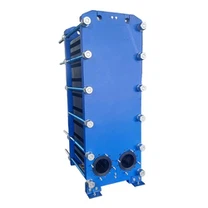
I. Why Do Plate Heat Exchangers Develop Holes? In Simple Terms, It Is the Result of Long-Term Overloading
The plates inside a plate heat exchanger may look thin-typically around 0.5 mm thick-but they perform several critical functions, including heat transfer, pressure resistance, and media separation. They may be thin, but they carry a lot of responsibility.
Once a plate becomes perforated or develops a hole, the consequences can be serious. The fluids on both sides may mix, the entire system may malfunction, and the result can range from an unplanned shutdown and major repairs to serious safety incidents.
So, how does a heat exchanger plate become perforated?
It does not usually happen suddenly. In most cases, the plate is gradually weakened over time.
Think of a steel wire. It does not normally break out of nowhere. After repeated friction, fatigue, and corrosion, it eventually reaches its limit and breaks.
The common causes of plate perforation include:
① Corrosion
Just like an iron pan gradually develops rust, heat exchanger plates can slowly deteriorate when exposed to corrosive media, such as low-pH acidic water or water with a high chloride concentration.
Pitting corrosion is particularly dangerous. It gradually penetrates deeper into the plate and can be difficult to detect with the naked eye. By the time a significant leak becomes noticeable, the damage may already be extensive.
② Fatigue Cracking
Frequent start-ups and shutdowns, as well as repeated changes between hot and cold operating conditions, cause the plates to repeatedly expand and contract.
Over time, this repeated thermal stress can cause cracks, much like bending a piece of metal back and forth until it eventually breaks.
③ Mechanical Damage
Improper handling during disassembly, cleaning, or reassembly can scratch or deform the plates.
A scratch or dent may seem insignificant at first, but it can become the starting point for more serious damage.
④ Scale and Deposits
Think scale is only a problem because it reduces heat transfer? Not necessarily.
Scale deposits can contain various metal ions and may create localized corrosion cells on the plate surface, accelerating corrosion in specific areas.
At first, a perforation may be only a microscopic hole. But once cross-contamination between the two media occurs, the consequences can quickly escalate:
Hot and cold media mix → equipment operates abnormally → system shutdown → repair costs increase significantly.
That is why plate perforation is far more than a minor problem. It can be the beginning of a major equipment failure.

II. How Can You Prevent Plate Perforation Before It Happens?
Using the right preventive measures is far more reliable than waiting for a problem to occur.
Since plate perforation is usually the result of gradual deterioration, prevention requires regular maintenance and proper inspection rather than emergency repairs after the damage has already occurred.
The key preventive measures include:
① Select the Right Material - Don't Choose Plate Materials Blindly!
The plate material is the first line of defense against corrosion.
For example, standard 304 stainless steel plates may not be suitable for highly chlorinated water. For high-chloride media, titanium plates may be a better choice. For acidic media, Hastelloy alloys may be considered. For high-temperature and high-pressure applications, duplex stainless steel may be more appropriate.
Choosing the wrong material can create a serious long-term risk for the equipment.
② Manage Water Quality - Proper Water Treatment Is Essential!
A heat exchanger cannot compensate for poor water quality.
Continuously feeding untreated or contaminated water into the equipment can accelerate deterioration. Depending on the application, water treatment measures such as water softening, dechlorination, and iron and manganese removal may be necessary.
In areas with high mineral content in the water, a suitable water-softening system is particularly important.
③ Maintain Proper Operating Conditions - Don't Overwork the Plates!
Frequent start-ups and shutdowns, as well as sudden changes in temperature, can accelerate plate fatigue.
Maintaining stable operating conditions and avoiding severe thermal shock can significantly reduce stress on the plates.
In other words, allowing the heat exchanger to operate under stable conditions is much better than constantly pushing it to its limits.
④ Clean the Plates Regularly - Don't Let Scale Create Hidden Problems!
Even a 1 mm layer of scale on a plate can create conditions for localized corrosion.
Regular chemical cleaning can remove scale and deposits while eliminating potential sources of corrosion before they spread.
⑤ Inspect the Plates Regularly - Detect Small Defects Early!
Don't wait until the heat exchanger develops a major leak before inspecting it.
At least once a year, the plates should undergo appropriate non-destructive testing, such as penetrant testing or fluorescent inspection, to identify small perforations or cracks at an early stage.
Early detection and repair can significantly reduce the cost and scope of later major repairs.
- Proper material selection + water quality management + controlled operating conditions + regular cleaning + early inspection are the five key measures for preventing plate perforation.
III. The Plate Is Already Perforated. What Should You Do?
If a plate is found to have a hole, don't panic. With proper handling, further damage and losses can be minimized.
The general process is as follows:
Step 1: Quickly Isolate the Damaged Plate
A perforated plate can cause cross-contamination between the two media.
The equipment should be shut down immediately, and the damaged plate should be removed and isolated to prevent further leakage and reduce the risk of additional damage to the system.
Step 2: Assess the Extent of the Damage
Check the location and size of the hole, as well as the number of damaged plates.
- For a small number of minor perforations, specialized welding techniques, such as laser welding or TIG welding, may be used for repair.
- If there is extensive corrosion or multiple damaged plates, replacing the affected plates is generally recommended. This avoids potential strength problems and safety risks that may remain after extensive repairs.
Step 3: Identify the Root Cause to Prevent Recurrence
Plate perforation does not happen without a reason.
The underlying cause must be identified. Was it a water quality problem? Was the plate material unsuitable for the operating medium? Was there an issue during cleaning or maintenance?
Only by identifying and correcting the actual cause can the same problem be prevented from happening again.
Otherwise, repairing the damaged plate alone may only be a temporary solution.
Step 4: Reassemble the Heat Exchanger and Perform Leak and Pressure Tests
After the damaged plates have been replaced or repaired, the heat exchanger should undergo strict leak-tightness and pressure testing.
The equipment should only be returned to operation after confirming that there are no leaks and that it meets the required operating standards.
- Do not take chances by continuing to operate a perforated plate.
Saving a little money in the short term can result in much greater losses later.
Once the perforation becomes larger, the entire heat exchanger may eventually have to be scrapped.
IV. Final Summary
The plates inside a plate heat exchanger are much like the glass screen on your smartphone-thin and relatively fragile, yet extremely important.
A perforation is a serious warning that the plate is approaching failure.
Prevention is always better than emergency repair.
Choose the right plate material, manage water quality properly, carry out thorough cleaning, and keep inspections up to date. With these measures in place, the risk of plate perforation can be greatly reduced.
Don't let perforated heat exchanger plates become your annual maintenance nightmare.
Take action early, protect this critical part of your equipment, and keep your plate heat exchanger running more reliably and operating for longer.