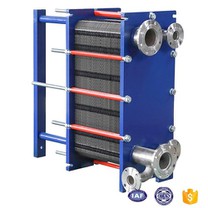
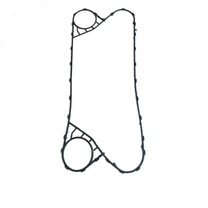
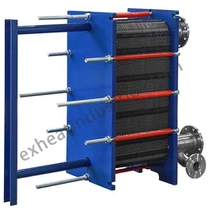
Plate heat exchanger is a very efficient heat transfer equipment, its application is very wide, plate heat exchanger most core components are plate heat exchanger plate and gasket. The level of the sealing pad directly determines the level of plate heat exchanger, plate heat exchanger seal failure is a very important production failure, so what are the reasons for plate heat exchanger seal failure? Summarised as follows: there are mainly pressure effects, temperature effects and time effects.
1 pressure impact
Removable plate heat exchanger in the rated working pressure inside the use of leakage, in addition to the device in the manufacture of assembly quality factors, generally and the system inside the abnormal shock load related to this is not easy for ordinary operators to view the situation, the impact caused by the instantaneous pressure peaks are often higher than the normal working pressure of about 2 times, so that the installation of plate heat exchanger inside the rubber sealing gasket displacements This makes the plate heat exchanger sealing failure, because the heat transfer element of this type of device using stainless steel sheet production, its sealing rigidity is relatively poor, while the sealing of the perimeter is very long, so the performance of impact resistance than shell and tube heat exchanger is low.
2.Impact of Using Time
Sealing materials of their own aging may affect the reliability of the seal when the equipment used or idled a few years,so should can take advantage of the opportunity to overhaul the timely replacement of new sealing gasket.
3 Temperature effects
Rapid changes in temperature can also lead to seal failure.When the temperature changed so rapidly, the rubber gasket coefficient of linear expansion and elastic deformation and sealing preload will not match, so that the sealing preload is reduced,resulting in the device bearing pressure than the rated design pressure is much lower.The above three factors are the main reasons for seal failure, when the seal failure occurs,we should be investigated as soon as possible to solve the problem, to avoid unnecessary losses.
Plate heat exchangers are a high safety requirement and external dripping is visible when the gasket is damaged. The plate heat exchanger will only drip slightly at first, but in process equipment with high pressure shocks, larger leaks may occur due to gasket damage. Under strong pressure shocks, the gasket can sometimes be moved out of its correct mounting position in the plate heat exchanger,or in severe cases even dislodged from the heat exchanger. In this case, the equipment must be stopped immediately so that the heat exchanger can be cooled to room temperature without pressure. If the gasket has been deformed under the action of the pressure shock, it cannot be restored to its original shape and position and must be replaced with a new gasket. If no spare gasket is available, the plate pieces on both sides of the damaged gasket must be removed from the entire plate heat exchanger set, and then the gasket bonding surface of the remaining plate heat exchanger plates must be inspected. Assemble the plates after extracting the damaged gasket. A new rubber gasket is then purchased and the plates are added to achieve the original heat transfer capacity. During disassembly and assembly of the plate heat exchanger, attention must be paid to the A-value: the clamping dimension.