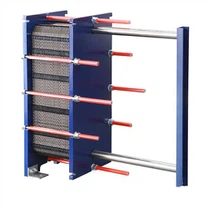
Have you noticed that many heating stations inevitably start to experience higher energy consumption after operating for a period of time? This is especially common during the winter heating season, when heating demand increases and system loads become heavier, driving energy costs up and putting significant pressure on operating expenses.
The good news is that choosing and using the right plate heat exchanger can help heating stations reduce energy consumption and improve overall operating efficiency.
A plate heat exchanger does much more than simply transfer heat. When properly selected and operated, it can play an important role in reducing energy consumption. So, how exactly can a plate heat exchanger help a heating station save energy and operate more efficiently? Let's take a closer look.
1. Improve Heat Transfer Efficiency and Reduce Heat Loss
One of the biggest advantages of a plate heat exchanger is its high heat transfer efficiency. It can transfer heat efficiently from the heat source to the secondary heating medium, improving the overall efficiency of the heating station. With the right plate heat exchanger, heat losses during the transfer process can be reduced, while the efficiency of heat utilization is improved. This helps reduce the workload on both the heat source and pumping system.
Plate heat exchangers use a highly efficient plate arrangement that allows fluids to exchange heat effectively within a compact flow path. Compared with traditional shell-and-tube heat exchangers, plate heat exchangers generally provide a larger effective heat transfer area and higher heat transfer coefficients, allowing heat to be transferred more quickly and efficiently.
Under the same heating load, this means the required heat can be transferred more efficiently, reducing unnecessary energy consumption.
The ability of plate heat exchangers to operate effectively with a small temperature difference allows available heat to be utilized more efficiently during the heat exchange process.
With proper temperature-difference management, the system can achieve sufficient heat transfer without unnecessary overheating. This helps reduce additional energy consumption and improves overall energy efficiency.
2. Optimize System Loads and Avoid Energy Waste
Fluctuations in system load have always been a challenge for heating station operation and management. When the system load is too high, heat exchangers and boilers may need to operate under heavy loads, which can increase energy consumption. When the load is too low, equipment may operate inefficiently, resulting in unnecessary energy use.
With their flexibility and adaptability, plate heat exchangers can work effectively under different operating conditions, helping the heating system respond to changes in demand and avoid unnecessary energy consumption.
Heating demand often varies significantly between different seasons and time periods. Plate heat exchangers can adapt to these changes by adjusting system flow and operating conditions according to the actual heating load.
For example, when the heating load is low, the system can reduce the flow rate through the plate heat exchanger to avoid unnecessary energy consumption. During peak demand periods, the heat exchanger can make full use of its heat transfer capacity to meet higher heating requirements.
This flexibility helps improve energy utilization under different operating conditions.
Frequent equipment startups and shutdowns can increase equipment wear and may also result in unnecessary energy consumption.
A properly designed plate heat exchanger system can help the heating station operate more steadily and respond more smoothly to changes in system load. With proper fluid distribution and temperature control, the system can reduce unnecessary fluctuations and avoid energy losses caused by frequent changes in operating conditions.

3. Reduce Energy Consumption in Pumps and Heat Sources
By improving heat transfer efficiency and helping optimize system loads, plate heat exchangers can ultimately reduce the energy consumption of both pumping systems and heat sources.
More efficient heat transfer can reduce the need for excessive heating, while proper hydraulic design can help control pumping requirements. As a result, the overall energy demand of the heating station can be reduced.
The compact flow channels of a plate heat exchanger are designed to provide efficient fluid flow while maintaining effective heat transfer.
When the heat exchanger is properly selected and the pressure drop is kept within a suitable range, the pumping system does not need to consume unnecessary power to maintain the required flow rate.
In simple terms, reducing unnecessary hydraulic losses can help lower pump energy consumption and improve the overall energy efficiency of the heating system.
The heat source in a heating system often needs to provide water at a relatively high temperature. With more efficient heat transfer, a plate heat exchanger can transfer the required amount of heat more effectively and reduce the need for excessive heating.
This can help reduce boiler or heat-source energy consumption while avoiding energy losses associated with unnecessarily high temperatures.
4. Regular Maintenance and Intelligent Control for Long-Term Energy Savings
Reducing energy consumption is not only about choosing the right equipment. Proper operation, regular maintenance, and effective system control are equally important.
Regular cleaning and maintenance can help keep a plate heat exchanger operating efficiently over the long term. Combined with intelligent control systems, the heating station can monitor operating conditions in real time and adjust temperature and flow according to actual demand, helping achieve better energy efficiency.
Scale and deposits can reduce the heat transfer performance of a plate heat exchanger. As fouling builds up on the heat transfer surfaces, heat transfer efficiency can decline while pressure drop may increase.
Regular cleaning helps remove scale and deposits, restore heat transfer performance, and maintain efficient operation. This can also help prevent additional energy consumption caused by reduced heat transfer efficiency and increased resistance.
With modern intelligent control technology, the operating conditions of a heating system can be monitored and adjusted in real time.
The system can adjust temperature and flow according to actual heating demand and operating data. By continuously monitoring system performance and analyzing load conditions, operators can further optimize the heating process and reduce unnecessary energy consumption.
5. Conclusion: How Plate Heat Exchangers Help Heating Stations Save Energy
Overall, plate heat exchangers can play an important role in reducing energy consumption in heating stations through efficient heat transfer, flexible operation, effective hydraulic design, and improved energy utilization.
From improving heat transfer efficiency and adapting to changes in system load to reducing the energy consumption of pumps and heat sources, plate heat exchangers can help heating stations use energy more efficiently and reduce unnecessary losses. Regular cleaning, proper maintenance, and intelligent control are also essential for maintaining long-term energy-saving performance.
As energy efficiency and environmental requirements continue to receive greater attention, reducing operating costs has become increasingly important for heating stations. Choosing the right plate heat exchanger and optimizing its operation can therefore make a significant difference to system efficiency and overall operating costs.
If you are looking for a practical way to improve heating station efficiency and reduce energy consumption, proper selection, operation, and maintenance of a plate heat exchanger can help you make better use of available heat and achieve more efficient, stable operation.