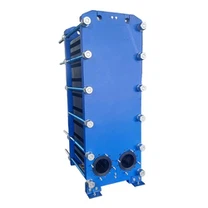
Why Does Your Plate Heat Exchanger Keep Getting Clogged? Check Your System Before Blaming the Equipment
When a plate heat exchanger becomes clogged, many people immediately wonder whether there is something wrong with the equipment itself. Are the plate gaps too narrow? Is the water flow not smooth enough?
In many cases, however, the real problem is not the heat exchanger itself. It is often related to poor water quality, inadequate filtration, or improper operating and maintenance practices.
Think about the drain in your home. If you keep pouring oil and food waste into it without cleaning it regularly, it will eventually become blocked. A similar thing happens inside a plate heat exchanger. Over time, contaminants can accumulate in the flow channels and restrict the passage of water.
Some of the most common causes of blockage include:
- Debris and suspended particles: If the incoming water is not properly filtered, larger particles such as sand, iron particles, algae, and other suspended solids can enter the heat exchanger. These materials can accumulate in the narrow flow channels and restrict water flow.
- Scale buildup: Calcium and magnesium in the water can form scale when exposed to heat. Over time, layers of scale build up on the plates, reducing the effective flow area and making the channels increasingly narrow.
- Biofilm growth: In circulating water systems, microorganisms can multiply over time. The resulting biofilm and organic deposits can accumulate on the plate surfaces and become another common cause of blockage.
In other words, the heat exchanger is not necessarily the problem. If the water entering the system is not properly treated and regular maintenance is neglected, even a well-designed heat exchanger can eventually suffer from restricted flow.
The Key to Preventing Clogging Is Prevention, Not Waiting Until the System Is Blocked
A plate heat exchanger should not be treated as equipment that only needs attention after a blockage occurs. Like any piece of equipment that operates continuously, it requires regular inspection and maintenance to keep it performing properly.
A common mistake is to wait until the heat exchanger is seriously blocked before cleaning it. Some operators may even rely on strong acids simply because they want to restore flow as quickly as possible. While this may temporarily remove deposits, aggressive cleaning can also increase the risk of damage to plates and gaskets.
A better approach is to combine preventive maintenance with regular cleaning:
- Monitor the pressure drop and temperature difference between the inlet and outlet. If the pressure drop starts to increase or heat transfer performance declines, it may indicate that deposits are beginning to restrict the flow channels.
- Set a cleaning schedule based on water quality and operating conditions. Do not wait until the equipment is severely fouled before taking action.
- Use backflushing or appropriate low-concentration cleaning solutions when suitable. Regular light cleaning can prevent deposits from becoming firmly attached and significantly reduce the need for aggressive cleaning later.
Preventing clogging is not a one-time task. It is part of routine equipment maintenance. Once regular inspection and maintenance become part of your operating practice, a plate heat exchanger can maintain stable performance for many years.
Which Cleaning Methods Actually Work? Don't Rely on Soaking Alone
Many people clean plate heat exchangers by simply filling them with a cleaning solution and leaving the solution in place for several hours. However, soaking alone does not always remove stubborn deposits.
Effective cleaning generally requires three key steps: dissolve, flush, and control.
1.Dissolve: Choose the Right Cleaning Agent for the Deposit
Not all deposits have the same composition. A plate heat exchanger may contain calcium carbonate scale, iron oxide deposits, organic fouling, or microbial biofilm.
Therefore, there is no single cleaning agent that is suitable for every type of deposit. The cleaning solution should be selected according to the actual fouling condition.
For example:
- Organic deposits: alkaline cleaning agents may be suitable.
- Carbonate scale: a mild, inhibited acidic cleaning solution can be used where compatible with the equipment materials.
- Microbial fouling: cleaning solutions with appropriate biocidal or antimicrobial components may be considered.
2.Flush: Use Water Flow to Remove Loosened Deposits
Dissolving deposits is only part of the cleaning process. Proper flushing is also important for removing loosened material from the flow channels.
This is especially important for heat exchangers with narrow channels and a large number of plates. Deposits that accumulate in difficult-to-reach areas may not be completely removed simply by soaking in a cleaning solution. Appropriate water flow and flushing can help carry away the loosened deposits.
In simple terms, the cleaning solution helps loosen the deposits, while flushing removes them. Both steps are important.
3.Control: Manage Cleaning Time and Temperature to Protect the Equipment
A cleaning solution does not become more effective simply because it is used for a longer period or at a higher temperature. Improper cleaning conditions can damage plates, gaskets, or other components.
For example, some gasket materials have limited temperature and chemical resistance, while certain plate materials can be damaged by aggressive chemicals. The cleaning temperature and duration should therefore be determined according to the plate material, gasket material, cleaning agent, and manufacturer's recommendations.
For the same reason, do not assume that a fixed temperature or cleaning time is suitable for every plate heat exchanger. After chemical cleaning, the system should also be thoroughly flushed, and neutralization may be required depending on the cleaning chemical used, so that chemical residues do not remain inside the equipment.
In short, cleaning should not be an aggressive chemical treatment. It should be a controlled process that removes deposits effectively while protecting the heat exchanger.

Besides Cleaning, These Daily Practices Can Also Reduce the Risk of Clogging
Preventing blockage is not only about cleaning the heat exchanger. More importantly, the amount of dirt and debris entering the equipment should be controlled during normal operation.
A filtration system acts as the first line of defense for a plate heat exchanger.
Using a suitable combination of coarse and fine filtration can help remove larger particles, metal debris, suspended solids, and other contaminants before they enter the narrow flow channels.
This simple step can significantly reduce the amount of material that accumulates inside the heat exchanger.
Circulating water should not simply be treated as water that can be reused indefinitely. Its quality directly affects the operating condition of the entire system.
Poor water quality can increase the risk of both scale formation and biological growth. Depending on the actual operating conditions, the system may require water softening, filtration, disinfection, or appropriate chemical water treatment.
Proper water treatment can reduce the amount of fouling entering the heat exchanger and help maintain stable heat transfer performance.
Developing a habit of recording operating data can make it much easier to identify problems at an early stage.
For example, you can regularly record:
- Inlet and outlet pressure
- Pressure drop across the heat exchanger
- Inlet and outlet temperatures
- Heat transfer performance
- Performance recovery after cleaning
If these parameters begin to change significantly, it may indicate that fouling or blockage is developing inside the heat exchanger.
Many engineers rely heavily on experience when assessing equipment conditions. Experience is valuable, but operating data can provide earlier and more objective indications of a developing problem.
The earlier a problem is identified, the easier and less expensive it is usually to address.
Conclusion
Clogging in a plate heat exchanger is often not caused by the equipment alone. Poor water quality, inadequate filtration, insufficient monitoring, and delayed cleaning can all contribute to the problem.
If you want your plate heat exchanger to operate efficiently and reliably, the basic approach is straightforward:
Prevent problems early, monitor operating conditions regularly, clean according to actual fouling conditions, and maintain the equipment properly.
With proper water treatment, effective filtration, regular inspections, and appropriate cleaning methods, you can reduce the risk of blockage, maintain stable heat transfer performance, and extend the service life of your plate heat exchanger.