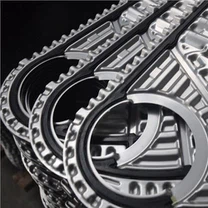
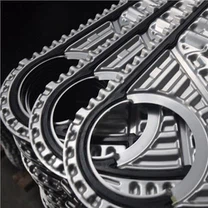
Heat exchanger Plate material clarification:
Heat exchanger plate material
Heat exchanger plate material
SUS304 plate (Taigang, Zhangpu): The most widely used austenitic stainless steel (such as food, chemical, atomic energy and other industrial equipment). Suitable for general organic and inorganic media.
SUS316L plate (Taigang, Zhangpu): Suitable for general organic and inorganic media. For example, natural cooling water, cooling tower water, softened water; carbonic acid; acetic acid and caustic lye with a concentration of <50%; solvents such as alcohols and acetone; dilute nitric acid (concentration <20%=, dilute phosphoric acid ( Concentration <30%= etc. However, it is not suitable for sulfuric acid. Because it contains about 2% Mo, it has better corrosion resistance in seawater and other chlorine-containing media than type 304, and it can completely replace type 304.
SMO254 plate (imported from Japan): An ultra-low-carbon high-grade stainless steel modified by increasing the Mo content of Type 316. It has excellent resistance to chloride pitting and crevice corrosion, and is suitable for media containing salt water and inorganic acid that cannot be used with Type 316.
Titanium plate (imported from Japan): It is non-alloyed titanium, which can naturally generate a passivation protective film, and if it is destroyed, it has "self-healing", so it has better corrosion resistance than stainless steel and is a typical material suitable for chlorine-containing media; imported, Two domestically produced, imported materials have higher titanium content, better process performance and longer service life.
Nickel plate: mainly used for high concentration (50%~70%), high temperature (up to boiling point) caustic solution (NaOH, KOH, etc.), but it is very sensitive to crevice corrosion caused by chlorides such as brackish water.
Hastelloy plate: suitable for various chemical industries containing oxidizing and reducing media. The higher content of molybdenum and chromium makes the alloy resistant to chloride ion corrosion, and the tungsten element further improves the corrosion resistance. Has good corrosion resistance: hardly affected by Cl-; excellent corrosion resistance to various concentrations of sulfuric acid, is one of the few materials that can be used for hot concentrated sulfuric acid; widely used in organic acids (such as formic acid, Acetic acid), high temperature HF acid and a certain concentration of hydrochloric acid (<40%), phosphoric acid (≤50%); chloride, fluoride and organic solvents (such as methanol, ethanol)