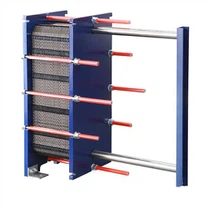
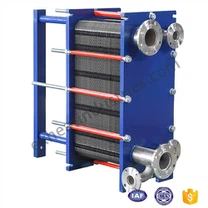
What are the primary side and the secondary side? The primary side is the "big source" of heat, just like the "energy treasure house" of the thermal world. The boiling hot water or the steam in the boiler room all start their thermal journey from here. The secondary side is for those heat users who are looking forward to the "embrace" of heat. The floor heating is quietly waiting for warmth under your feet, the radiator is emitting enthusiasm in the corner, and the central air conditioner makes the whole space immersed in comfort. They are all "heat fans" on the secondary side.
How to distinguish the supply water and return water? This is like a temperature "race". Whether on the "track" of the primary side or the secondary side, the pipe with high temperature is the energetic supply water, like a "hot pioneer" with full energy; while the pipe with low temperature is the return water that has completed its mission, like a "cold guard" who takes a short rest and prepares to set off again.
What is the difference between high-temperature water and low-temperature water? High-temperature water is like the "hot-blooded hero" in the thermal family. Its temperature is higher than or equal to 100 degrees. The 130/80 degrees in the national standard is its "standard image". The supply water temperature of 130 degrees is full of "thermal energy", and the return water temperature of 80 degrees is the "residual heat" after release. Low-temperature water is relatively speaking a "gentle hand warmer". The temperature is lower than 100 degrees. For example, the standard of 95/70 degrees is that the supply water is 95 degrees to gently send warmth, and the return water is 70 degrees to quietly end. Remember, they are mainly "showing off" in the primary side system.
Operation parameter code: A comprehensive interpretation of normal rules When the heat exchanger is operating normally, it is like following the rules of a mysterious "heat dance". The supply water temperature must be high above, looking down on the return water temperature; the supply water pressure is also vigorous and ahead of the return water pressure. The difference between the primary side supply water pressure and the return water pressure has a "bottom line", which must be greater than or equal to 0.05MPa, which is like a "pressure difference dance" between them. The difference between the inlet and outlet pressures on the secondary side of the plate heat exchanger should be "low-key", less than or equal to 0.15MPa. If the primary side is the "hero" of high-temperature water, the temperature difference between the supply water and the return water temperature will not exceed 40 degrees; if the low-temperature water "hand warmer" is at home, the temperature difference is obediently limited to within 25 degrees. If the secondary side is radiator heating, the "warm-up guest", the temperature difference will not exceed 25 degrees; if it is floor heating or air conditioning heating, the two "comfort elves", the temperature difference will be gently controlled within 14 degrees.
Troubleshooting: How to deal with it? What should I do if the fault indicator light is on? When the unit fault indicator light is on like a "little warning light elf", the yellow light on the control cabinet seems to be shouting "Attention!" This means that the corresponding water pump is overloaded like a "tired little Hercules", and the motor current, a "naughty ghost", has crossed the "red line" of the rated current. The thermal relay is like a "guardian" to start protection. Don't worry, press the reset button on the thermal relay, just like giving it a "comforting hug" to reset it. But don't be impatient, wait until the thermal relay cools down like a "calm sleeping beauty" before operating, otherwise it will ignore you.
There is pressure but the pressure gauge is 0, what's going on? If the needle valve of the pressure gauge is closed like a "naughty little gate", the pressure gauge can only stare blankly and display 0. Therefore, in the "thermal show" of unit operation, it is necessary to ensure that all the needle valves of the pressure gauge are in the fully open state like "open arms and doors", so that the pressure gauge can report the pressure situation truthfully.
Secondary side overpressure, what are the causes and solutions? When the system is just started, the secondary side temperature is like a "lazy bug" and is relatively low. After the water is added to the set pressure value, as the temperature slowly rises, the pressure also rises like an "inflated balloon". At this time, you have to be like a "pressure regulator master". First, exhaust more air to drive out those "troublesome little bubbles"; second, drain water, open the drain valve of the secondary return pipe as the "pressure release port". When the system temperature stabilizes, the pressure will be like a "well-behaved little sheep" and no longer toss.
How to judge whether the filter is clogged? If the temperature difference between the primary water supply temperature and the return water temperature becomes large like an "out-of-control thermometer", the high-temperature water exceeds 45 degrees, the low-temperature water exceeds 30 degrees, and the secondary water supply is still like a "cold little ice cube" and is not hot, then you have to check whether the filter at the primary water supply is blocked by the "little dirt monster". If the temperature difference between the secondary water supply temperature and the return water temperature is also large, the floor heating temperature difference exceeds 15 degrees, the radiator heating temperature difference exceeds 30 degrees, and the pressure difference is as small as a "weak little ant", then you have to check whether the filter at the secondary return water is "lazy and blocked".
How to judge whether the heat exchanger is blocked? Once the pressure difference between the primary side supply and return water or the pressure difference between the inlet and outlet of the secondary side heat exchanger exceeds 0.15MPa, and the secondary water supply temperature is still not hot, the heat exchanger may be entangled by the "blockage demon". At this time, disassembling and cleaning the heat exchanger is like giving it a "refreshing bath" to clean up all the dirt.
Analysis and treatment of the reasons why the system is not hot? The secondary water supply temperature is low and not hot, there are many "doors" in it. First, the water supply flow on the primary side is insufficient, just like the water source is "out of food". First check whether all the valves of the primary water supply and return water pipelines are open like a "smooth river", whether the primary water supply filter is blocked by the "army of impurities", and whether the temperature control valve is a normal "working expert". If all the valves are open, then look at the pressure difference of the primary supply and return water. If it is less than 0.05MPa, you have to find a heating company to "expand the flow army"; if it is greater than 0.15MPa, you have to clean the heat exchanger, the "heat exchange expert". Second, the secondary system is not smooth. Check whether the valves of the secondary water supply and return pipelines are "open obediently", whether the secondary filter is "attacked by dirt", and check whether the system pipeline is "obstructed by foreign objects" when the equipment is run for the first time. If the pressure difference between the inlet and outlet of the secondary heat exchanger is higher than 0.15MPa, it means that the heat exchanger is "blocked and blocked", so clean it quickly. Also, if it is the first time to run, don't forget to check whether the inlet and return pipes are connected reversely like the "naughty pipe elves".
Why can't the make-up water be replenished? The make-up water pump keeps turning like a "hard-working little water craftsman", but the pressure doesn't rise like a "stubborn little snail". It may be that the system's air collection is like a "bubble monster" making trouble, and at this time, the pump and system need to have an "exhaust magic show". It may also be that the make-up water pump is like a "lost little gyroscope" reversing, the impeller or coupling is like a "small escaped part" falling off, etc. Then you have to check the pump's inlet and outlet water systems to see if the valve is not opened like a "closed stone door" or the pipe blockage is like a "roadblock little bad guy" blocking the water flow.
The variable frequency water replenishment or circulation pump is not automatic, and the frequency converter is out of control? First check whether the conversion switch is like a "lost little arrow" and is not in the variable frequency or automatic position. It must be in the correct position for the frequency converter to work normally like a "smart little housekeeper". Also check whether the signal feedback is connected incorrectly like a "little messenger who sends the wrong message", and whether the frequency converter parameter settings are incorrect like a "messenger with a wrong password lock". Look at the frequency converter operation panel to see if there is an alarm code like a "mysterious flare". The code starting with F is a fault code, like a "danger alarm"; the code starting with R is a warning code, like a "friendly reminder". The warning does not affect the operation. When the fault code appears, the frequency converter, the "smart brain", must be reset. If there is a fault code, press the EXIT key in the upper left corner of the frequency converter operation screen. In addition, check the power frequency or other circuits, such as whether the contactor is not attracted like a "lazy little switch", and whether the trigger relay is "derelict of duty and inaction".
What should I do if the secondary water supply temperature is too high? If the user feels that the water supply temperature is too high like a "hot fireball" and the room is too hot like a "steamer", the best way is to turn down the primary water supply valve like a "temperature control master". Remember, the return valve should be fully open like a "unobstructed avenue". Also check whether the primary temperature control valve is like a "failed temperature commander" and is in a fully open state.
What is the reason for the excessive noise of the water pump? After the unit runs for one or two heating seasons, the water pump will become noisier due to mechanical wear like a "tired old craftsman". At this time, check whether the fan cover is loose like a "loose little armor", whether the bearing is lacking oil or damaged like a "small joint lacking oil", whether the impeller and the pump body are rubbing like "quarreling friends", whether the concentricity of the motor and the pump is like a "crooked little dancer", and give the pump a "little exhaust magic". The water pump should be regularly maintained like a "loved car", adding lubricating oil, replacing wearing parts, etc.
The water supply pump frequently replenishes water, and the pressure drops quickly? After the unit has been operating normally for a long time, the water supply pump frequently replenishes water like a "busy little water slave", and once it stops, the pressure drops rapidly like a "deflated balloon". First check whether the secondary system is like a "leaky little water bag" with pipe or valve leaks. Then check whether the check valve in front of the water supply pump is like an "incompetent little doorman" that is not tight and has backflow. The inspection method is to stop the water supply pump first, close the water supply pump inlet valve, and then open the exhaust valve at the outlet of the water supply pump. If water is discharged like a "running little water drop", it means that the check valve is not tight and a "reliable new doorman" must be replaced.
One pump rotates and the other follows? When the unit is running, turn on one circulating pump, and the other one follows and rotates in the opposite direction like a "naughty follower". This means that the check valve in front of the pump that is not turned on is like a "small valve that cannot be closed tightly" and is not tight. It needs to be replaced with a "tight new one". If it cannot be replaced for the time being, close the butterfly valves before and after this pump like a "small isolation guard" to prevent water from flowing back.
How to judge the direction of the shielded pump? For the shielded pump, the "mysterious little pump man", the most reliable way to judge the direction is to use a clamp-on ammeter to measure the current like a "current detective". The forward current is like a "Hercules current" and is greater than the reverse current. If it is an ordinary pump, just observe the rotation direction of the motor blades or coupling like a "visual navigation".
The pump light is on but the pump is not running? The pump start indicator light is on like a "deceptive little colored light", but the pump is not running like a "lazy little lazy bug". At this time, check the circuit breaker in the control cabinet and make the circuit breaker contacts like a "power-on small switch" in the energized state, that is, check whether the main circuit of the motor is like a "disconnected small circuit" in a phase-loss or circuit-breaking state.