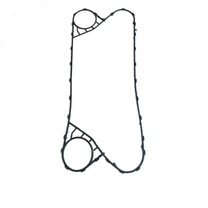
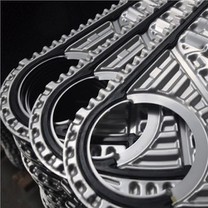
Plate heat exchanger process combination of one section, two sections is what? What is the heat exchange area?
Plate heat exchanger process of one section, two sections usually refers to the fluid flow path inside the heat exchanger. In a plate heat exchanger, the fluid flows on both sides of the plates, forming multiple flow paths, which are called processes. Each process includes a series of plates in which the fluid flows in a staggered manner to achieve heat exchange.
A section of the process: refers to the fluid from one end of the heat exchanger into, flow through a set of plates, from the same end or the other end of the outflow. Such a flow path is called a section of the process heat exchanger.
Two-stage process: the fluid enters from one end of the heat exchanger, flows through the first set of plates, through a specially designed channel to guide the fluid back to flow through the second set of plates again, and finally from the same end or the other end of the outflow. Such a flow path is called a two-stage process heat exchanger.
The two-stage process heat exchanger has a higher heat transfer efficiency than the one-stage process heat exchanger because the fluid flows longer inside the heat exchanger and the heat exchange is more adequate.
Plate heat exchanger heat transfer area:
Concept: heat transfer area is the total area used for heat exchange in the plate heat exchanger. The size of the heat transfer area directly affects the capacity of the heat exchanger, that is, how much heat can be exchanged. The larger the heat transfer area, the more heat the heat exchanger can handle, and the higher the heat transfer efficiency is usually. The heat transfer area is usually determined by the number and size of the heat exchanger plates, as well as the shape and depth of the corrugations on the plates. Calculation of heat transfer area is usually based on the area of a single heat exchanger plate multiplied by the total number of heat exchanger plates.
Selection: The selection of the heat transfer area should be based on the heat load requirements of the actual application to ensure that the heat exchanger can meet the process requirements in actual operation, while also taking into account the nature of the fluid, heat transfer efficiency, pressure loss, and cost and other factors.