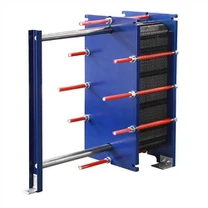
Shell-and-tube heat exchanger is a shell-and-tube heat exchanger which is mainly composed of shell, tube bundle, tube sheet and head. The shell is mostly circular and contains parallel tube bundles or spiral tubes. , The two ends of the tube bundle are fixed on the tube plate. There are two kinds of fluids for heat exchange in the shell-and-tube heat exchanger, one flowing in the tube, and its stroke is called the tube pass; the other flowing outside the tube, and its stroke is called the shell pass. The wall surface of the tube bundle is the heat transfer surface.
There are different types of pipes. The process is generally 16mm 20mm or 25mm in diameter. The pipe wall thickness is generally 1mm, 1.5mm, 2mm and 2.5mm. The imported heat exchanger has a minimum diameter of 8mm and a wall thickness of only 0.6mm. The heat exchange efficiency has been greatly improved, and it has been gradually promoted in the domestic market since 2012. The shell-and-tube heat exchanger and the spiral tube bundle design can maximize the turbulence effect and increase the heat exchange efficiency. The asymmetrical design of the inner shell and tube layer can be up to 4.6 times. This asymmetric design determines its wide application in the field of steam-water heat transfer. The maximum heat exchange efficiency can reach 14000w/m2.k, which greatly improves production efficiency and saves costs. At the same time, because the shell and tube heat exchangers are mostly metal structures, with the launch of China's new version of GMP, stainless steel 316L heat exchangers will become a must for the beverage, food, and pharmaceutical industries.