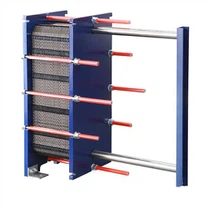
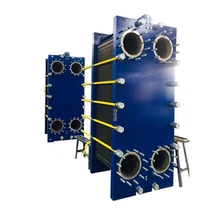
In the above article, we discussed the impurities in the water on the plate heat exchanger hazards, the following we will further detail the precautionary measures and precautions, and through the actual application of the case, to help you better understand and apply these protective strategies.
First, the precautionary measures in detail
1. Regular cleaning of heat exchangers
- Case: a large air conditioning system, due to long-term operation without cleaning, heat exchanger internal accumulation of a large amount of scale and sludge. Through a professional cleaning company using high-pressure water jet technology for cleaning, successfully restored the heat transfer efficiency, reducing energy consumption.
- Operation steps:
- Regularly check the internal condition of the heat exchanger and record the scale and sludge accumulation.
- Select the appropriate cleaning method, such as mechanical cleaning, chemical cleaning or high-pressure water jet cleaning.
- Check the heat exchanger for damage after cleaning and repair it in time.
2. Add anti-scaling and anti-corrosion agents
- Case: a pharmaceutical plant in the cooling water system, add a special anti-scaling agent and corrosion inhibitor, effectively reduce the generation of CaCO3 scale, while preventing metal corrosion, extend the service life of the heat exchanger.
- Operation steps:
- According to the results of water quality analysis, select the appropriate anti-scaling agent and anticorrosion agent.
- Determine a reasonable dosage to maintain a stable concentration of chemicals in the circulating water.
- Regularly monitor the water quality and adjust the dosage of chemicals.
3. Keep the water clean
- Case: A power plant installed automatic backwashing filters to effectively remove suspended solids and particles in the circulating water, reducing the risk of heat exchanger scaling and corrosion.
- Operating Procedure:
- Install a pre-filtration system, such as sand filters and bag filters.
- Regularly check and replace the filter material to ensure the filtering effect.
- Monitor the quality of circulating water and strictly control the content of suspended and particulate matter.
4. Select corrosion-resistant materials
- Case: a chemical plant in the purchase of heat exchangers, choose a titanium alloy material made of plate heat exchanger, because of its excellent corrosion resistance, even in the strong acidic and alkaline environment can be stable operation.
- Operation steps:
- According to the characteristics of the medium, select heat exchanger materials with strong corrosion resistance, such as stainless steel and titanium alloy.
- Consider the structural design of the heat exchanger to reduce dead space and sediment accumulation.
5. Strengthen the operation and management
- Case: a hotel through the implementation of heat exchanger operation monitoring system, real-time monitoring of the heat exchanger operating status, timely detection and treatment of potential problems, to avoid equipment failure.
- Operation steps:
- Establish a heat exchanger operation log to record operating parameters and abnormalities.
- Regularly train operators to improve their understanding and ability to maintain the heat exchanger.
- Formulate an emergency plan to provide a quick response to possible failures.
II. Precautions
- In the chemical cleaning, to ensure that the chemical agent used will not cause damage to the heat exchanger material.
- The chemical agent should be uniformly injected to avoid localised over-concentration leading to side effects.
- Cleaning and maintenance to ensure system safety, to avoid equipment damage or personnel injury caused by improper operation.
- Regularly evaluate the performance of the heat exchanger to ensure that it operates at its optimum condition.
Through the above detailed analysis and actual cases, we can see that as long as the correct precautions are taken, the hazards of impurities in water on plate heat exchangers can be effectively reduced. Let's act together to protect our heat exchanger and ensure the long-term stable operation of the equipment.