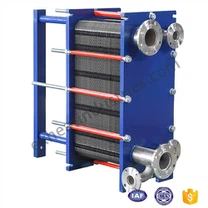
Have you ever experienced this situation?
A plate heat exchanger performs exceptionally well when it is first installed, but after only a few months, its heat transfer efficiency drops noticeably.
The outlet water is no longer hot enough, the pressure becomes unstable, and energy consumption keeps increasing for no obvious reason.
When you finally open the unit for inspection, you find the plates covered with thick layers of scale-almost like burnt residue stuck to the bottom of a cooking pot.
So why do plate heat exchangers accumulate scale so easily?
Here's a closer look at the main causes.

1. Hard Water Contains Too Many Minerals
Don't be fooled by clear-looking water. It often contains large amounts of dissolved minerals, especially calcium and magnesium ions.
When the water is heated, these minerals gradually precipitate and adhere to the heat transfer plates, eventually forming scale.
This problem is particularly common in closed-loop circulating water systems. Since the same water is heated repeatedly without being replaced, mineral deposits continue to accumulate, making the scale layer thicker over time.
Think of it like cooking porridge. The pot is clean the first time, but if you cook several batches without washing it, burnt residue is bound to build up.
That's why proper water treatment is essential.
Installing a water softener, using anti-scale chemicals, and replacing filters regularly are not optional-they are effective ways to protect your equipment.
Ignoring water treatment may save a little money today, but once the plates become clogged, the repair costs can be much higher.
2. Excessive Temperature Accelerates Scale Formation
In some applications, operators set the heat exchanger to run at unnecessarily high temperatures.
It may seem that a higher temperature always means better heat transfer.
However, for calcium and magnesium in the water, higher temperatures simply accelerate precipitation.
In high-temperature areas, scale can form much faster, significantly reducing heat transfer performance.
As a result, any short-term improvement in efficiency is quickly offset by a layer of scale covering the plates.
The solution is simple.
Instead of pursuing the highest possible operating temperature, maintain an appropriate temperature range.
When conditions allow, keeping the operating temperature below approximately 70°C can provide effective heat transfer while slowing down scale formation.
Simply put, operating the equipment at a moderate temperature can significantly extend its service life.
3. Low Flow Velocity Creates Deposits
Scale tends to accumulate in areas where water flows slowly.
The edges of the plates, corners, and low-velocity zones are especially prone to mineral deposits.
Sometimes the problem is not poor water quality or excessive temperature-it is simply uneven flow distribution.
An improper system design, an undersized pump, or poorly designed distribution channels can all reduce flow velocity in certain areas.
Over time, mineral deposits continue to collect in these locations until heavy scaling develops.
The key is to maintain uniform flow throughout the heat exchanger.
Proper piping design, sufficient inlet pressure, and stable flow control help create enough flushing force to reduce scale buildup on the plates.
4. Delayed Cleaning Allows Scale to Accumulate
This is one of the most common problems.
Many facilities assume everything is fine as long as the heat exchanger continues operating.
Only after heat transfer efficiency drops or flow becomes restricted do they schedule cleaning.
By then, the scale layer has often become thick enough to require extensive removal.
Instead of waiting for problems to appear, establish a regular maintenance schedule.
For example, perform a simple flushing every three months and a chemical cleaning every six months.
Mild cleaning solutions, such as citric acid or acetic acid, can effectively remove scale while minimizing the risk of damaging the plates.
5. Improper Installation Causes Uneven Flow Distribution
This factor is often overlooked.
Even a slight installation error or incorrect piping connection can cause uneven flow distribution inside the heat exchanger.
Some flow channels receive adequate flow and remain relatively clean, while others experience slower flow and become ideal locations for scale formation.
As a result, one section of the heat exchanger continues operating efficiently while another becomes increasingly clogged, reducing the overall performance of the equipment.
To avoid this problem, pay close attention during installation.
Make sure the flow distribution area is unobstructed, the piping direction is correct, and the inlet and outlet connections are properly installed.
Experienced technicians know that proper installation can be just as important as regular cleaning.
Final Thoughts
In many cases, scale buildup is simply the result of inadequate maintenance.
A plate heat exchanger is not difficult to maintain-it simply requires consistent care.
Poor water quality management, excessive operating temperatures, unstable flow conditions, and neglected maintenance may seem like minor issues individually, but together they become major factors that reduce heat transfer efficiency.
Rather than waiting until the equipment becomes clogged, production must stop, and costly repairs are required, it is far better to take preventive action.
Provide clean, properly treated water, maintain stable flow, avoid excessive temperatures, and clean the equipment regularly.
With proper care, your plate heat exchanger will operate more efficiently, last longer, and deliver more reliable performance.