

A plate heat exchanger is an unsung workhorse in industrial systems. It transfers heat from one fluid to another, heating cold fluids and cooling hot ones to keep the entire system running efficiently. However, even a piece of equipment built for durability cannot escape a common problem over time: clogging.
Today, let's take a closer look at why plate heat exchangers are prone to clogging, why regular cleaning is so important, and what can happen if maintenance is neglected.
1. What Causes Plate Heat Exchangers to Clog?
Plate heat exchangers have a compact internal structure, with fluids flowing through narrow channels between the plates to transfer heat. However, tiny impurities in the fluid, such as sand, rust, calcium and magnesium ions, and other suspended particles, can gradually accumulate on the plate surfaces.
As these deposits build up layer by layer, they restrict the flow channels, making it increasingly difficult for fluids to pass through. This reduces the heat transfer efficiency of the equipment.
Sediment buildup is particularly common in systems with high levels of impurities or hard water. Water that has not been properly filtered can significantly increase the risk of blockage.
In warm and humid environments, microorganisms such as bacteria, algae, and fungi can multiply rapidly in the fluid.
These microorganisms attach themselves to the plate surfaces and produce sticky substances that form biofilms. Over time, these slippery deposits spread across the plates and narrow the flow channels, reducing heat transfer performance. In severe cases, they can completely block certain channels.
Chemical scaling is another common cause of blockage in plate heat exchangers.
For example, when water containing calcium and magnesium ions is heated, these minerals can precipitate and form insoluble scale on the plate surfaces. This is particularly common in systems using hard water with high mineral content.
As time passes, the scale layer becomes thicker and harder to remove, creating a barrier to heat transfer. If left untreated, it can significantly reduce the overall efficiency of the heat exchanger.
2. Why Is Cleaning a Plate Heat Exchanger Essential?
A clogged plate heat exchanger cannot operate as efficiently as it should. Deposits on the plate surfaces restrict fluid flow and interfere with heat transfer. As a result, the equipment may take much longer to achieve the required heating or cooling performance.
Regular cleaning removes accumulated deposits from the plate surfaces, helping restore heat transfer efficiency and maintain smooth fluid circulation. This can reduce unnecessary energy consumption and improve the overall operating efficiency of the system.
Clogging is not just a problem affecting heat transfer efficiency. It can also create operational risks.
When fluid flow becomes restricted, pressure drop across the heat exchanger may increase, and abnormal operating temperatures or pressure fluctuations may occur. These conditions can put additional stress on the equipment, pipelines, and sealing gaskets, increasing the risk of leakage and unexpected shutdowns.
Regular cleaning helps reduce flow restrictions and maintain more stable operating conditions, lowering the risk of equipment failure and unplanned downtime.
Plate heat exchangers can represent a significant investment, with some industrial units costing tens of thousands of dollars or more. Proper maintenance is therefore essential to protect that investment.
Regular cleaning helps prevent excessive deposit buildup, reduces unnecessary operating stress, and minimizes the risk of premature component replacement.
Compared with the cost of major repairs, replacement parts, or unexpected production downtime, routine cleaning is often a much more cost-effective way to extend equipment service life and control long-term maintenance expenses.
3. How Often Should a Plate Heat Exchanger Be Cleaned?
As a general guideline, a plate heat exchanger should be cleaned every 6–12 months. However, if the equipment operates in harsh conditions or handles fluids containing high levels of impurities, the cleaning interval may need to be shortened to every 3–6 months.
The actual cleaning frequency depends on several factors, including operating conditions, fluid quality, equipment usage, and the amount of deposit buildup.
You should also watch for the following warning signs:
- Reduced Flow Rate: A noticeable drop in fluid flow may indicate that deposits are restricting the internal channels.
- Slower Heat Transfer: If the hot or cold outlet temperature fails to reach the expected level, the heat exchanger may have lost some of its heat transfer efficiency.
- Abnormal Pressure Changes: An unusually high pressure drop or unstable pressure readings may indicate internal blockage or other operating problems.
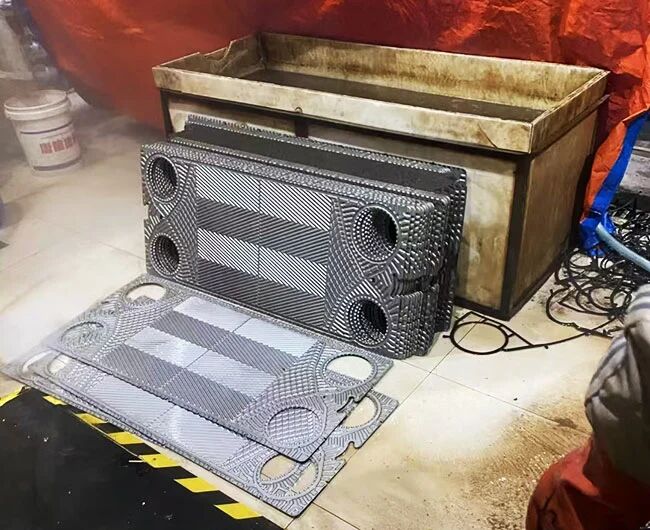
If you notice any of these symptoms, it is important to inspect the equipment and arrange cleaning when necessary. Early maintenance can prevent minor problems from developing into more serious failures.
4. What Are the Main Cleaning Methods for Plate Heat Exchangers?
Different types of deposits require different cleaning methods. The three commonly used approaches include mechanical cleaning, chemical cleaning, and ultrasonic cleaning.
Mechanical cleaning typically involves high-pressure water jets, brushes, and other tools to remove deposits directly from the plate surfaces.
It is a relatively straightforward method and works well for removing loose dirt, sediment, and light deposits. It is particularly suitable for plate heat exchangers with relatively mild fouling.
However, care must be taken when cleaning the plates to avoid damaging their surfaces or deforming the plates and sealing areas.
Chemical cleaning uses specially formulated acidic or alkaline cleaning solutions to dissolve and remove scale, oil, and other stubborn deposits.
The cleaning solution is circulated through the heat exchanger to soften and break down contaminants accumulated on the plate surfaces and inside the flow channels.
This method is particularly useful for removing mineral scale, oil contamination, and microbial biofilms that are difficult to eliminate through mechanical cleaning alone.
However, selecting the right cleaning agent and concentration is essential. The chemical solution must be compatible with the plate material and gasket material to prevent corrosion or damage to the equipment.
Ultrasonic cleaning uses high-frequency sound waves to generate microscopic cavitation bubbles in a cleaning solution. When these bubbles collapse, they produce localized forces that help dislodge contaminants from the plate surfaces.
This method can reach narrow gaps and hard-to-access areas where conventional cleaning tools may be less effective.
Ultrasonic cleaning is particularly suitable for applications that require thorough cleaning of individual plates. It offers an effective way to remove stubborn deposits while minimizing direct mechanical contact with the plate surfaces.
5. Conclusion: Clean Your Plate Heat Exchanger Before Problems Get Worse
Once a plate heat exchanger becomes clogged, its heat transfer efficiency can drop significantly. This can increase energy consumption, affect system performance, and shorten the equipment's service life.
Regular cleaning helps restore heat transfer performance, maintain smooth fluid flow, and extend the service life of the equipment.
Whether you choose mechanical cleaning, chemical cleaning, or ultrasonic cleaning, the key is to select a suitable method based on the type of deposits, plate material, and actual operating conditions.
More importantly, establish a reasonable cleaning schedule instead of waiting until serious problems occur. Proper cleaning and preventive maintenance are essential to keeping your plate heat exchanger operating efficiently and reliably.


