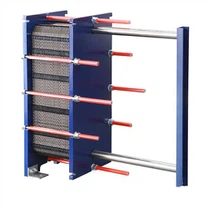
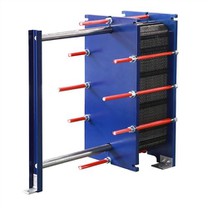
01|If plate heat exchangers could talk, they would cry out: I'm worn out!
On industrial sites, seasoned technicians all know that the sounds made by equipment serve as the earliest warning alarms.
A normally operating plate heat exchanger runs softly, sounding like water gently swirling inside pipelines. Yet once it starts making clunking, creaking or droning noises, something is clearly wrong.
Most people's first thought is that the bolts might have come loose. But the truth is usually far more complicated.
Abnormal noises from the heat exchanger are its way of signaling pain. Sometimes it is strained by trapped gas, sometimes battered by turbulent water flow, and sometimes clogged up by scale deposits. Every odd sound you hear points to a distinct underlying fault.
02|Gurgling Sounds – No Guesswork, Air Has Gotten Inside
The most frequent abnormal noise is bubbling sounds of gurgling and popping, just like water boiling in a pot. However, a heat exchanger is nothing like a kitchen - this noise indicates air has entered the piping system.
When air mixes into the heat exchange system, air pockets form between the heat exchanger plates. As water passes through, the trapped air gets compressed and bursts, producing constant bubbling noises.
Never overlook this subtle sound, as it will sharply reduce heat transfer efficiency. Air is a poor heat conductor, rendering nearly half of the plate surface ineffective and obstructing heat exchange. In addition, accumulated air tends to cause cavitation, which will pit and erode the plates after long-term operation.
The troubleshooting steps are simple: First, inspect whether the vent valve installed at the highest point of the pipeline is jammed. Second, check for negative pressure at the suction port of the circulating pump. Once all trapped air is fully vented, the abnormal noise will generally vanish right away.
03|Metallic Knocking & Shuddering Noises – Turbulent Water Flow Clashing Against Itself
Another type of noise consists of clanging and droning vibrations, resembling metal striking against metal or a shaking motor. This issue is mostly triggered by excessive flow velocity or uneven fluid distribution.
The internal channels of plate heat exchangers are extremely narrow. When water flow is forced through by a large pressure differential, it surges and collides chaotically between plates. Each knock you hear is essentially fluid clashing inside the unit.
This is especially common right after pump startup, if valves are opened abruptly before temperatures stabilize. Water is forced harshly into the system alongside air bubbles, impurities and pressure waves, creating startling loud noises.
Solutions
Moderate the flow velocity gradually. Avoid rapid valve opening and sudden pump startup. Meanwhile, inspect flow channels in the distribution area for scale blockages. If one side is clear while the other is restricted, water flow will inevitably become unbalanced.
04|Sharp Hissing or Sawtooth-Like Whining – Watch Out for Corrosion and Leakage
If the noise is neither bubbling nor vibrating, but a continuous sharp hiss, it signals the most hazardous fault: leakage.
Plate heat exchangers separate hot and cold media via sealing gaskets. Once any gasket ages, shifts position or suffers corrosion, high-pressure fluid may spray out through gaps, producing a sound similar to compressed air or a tiny pneumatic drill.
Do not lean in close to inspect the noise – hot media can cause instant scalding injuries. Shut down the equipment for inspection without delay. Focus checks on hardened, aged gaskets and corroded perforations along plate edges. Replace gaskets or plates as required. Do not delay maintenance for another week of operation; that week could count down to a severe accident.
05|Low Resonant Humming – Caused by Improper Installation and Supports
Sometimes the equipment itself functions normally, yet the entire system emits a low resonant hum like a growl. This points to unstable mounting brackets or loose anchor bolts.
During operation, plate heat exchangers transfer pulsations from pumps, fluid vibrations and thrust from connected pipelines. Loose anchor bolts or unevenly padded brackets will trigger resonant shaking across the whole piping assembly.
Over time, this not only generates persistent loud noise but may crack pipe flanges and joints. During routine maintenance, do not only check internal scale buildup – also inspect base supports to ensure stable mounting.
Closing Remarks
Plate heat exchangers cannot speak, yet they send audible warning signals. Gurgling bubbles, metallic knocks, sharp hisses and low resonant hums – each sound is the unit alerting you of underlying faults.
Major incidents such as fluid spillage and plate rupture can all be predicted in advance from these subtle abnormal sounds. Do not rely solely on alarm lights, which deliver delayed warnings. Smart maintenance relies on trained ears that detect faults even earlier than sensors.