Overview
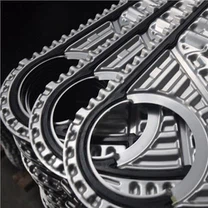
Heat exchanger (heat exchanger), is the hot fluid part of the heat transfer to the cold fluid equipment, also known as heat exchangers. A heat exchanger occupies an important position in chemical, petroleum, power, food, and many other industrial production, its heat exchanger in chemical production can be used as a heater, cooler, condenser, evaporator reboiler, etc., widely used.
Classification
For different media, different working conditions, different temperatures, different pressures of the heat exchanger, structure type is also different, the specific classification of heat exchangers are as follows:
1, According to the classification of the heat transfer principle
Inter-wall heat exchanger
The inter-wall heat exchanger is a temperature difference between the two fluids in the space separated by the wall flow, through the wall of heat conduction and fluid convection in the wall surface, heat transfer between the two fluids. There are shell and tube, casing, and other types of heat exchangers. The wall-to-wall heat exchanger is currently the most widely used.
Thermal storage heat exchangers
Heat storage heat exchanger through the solid material constituted by the heat storage body, the heat from the high-temperature fluid to the low-temperature fluid, the hot medium first through the heating of solid material to reach a certain temperature, the cold medium and then through the solid material is heated, so that it achieves the purpose of heat transfer. The heat accumulator heat exchanger has a rotary type, valve switching type, etc.
Fluid-connected indirect heat exchanger
Fluid connected indirect heat exchanger is a heat exchanger in which two surface heat exchangers are connected by the heat carrier circulating in them, the heat carrier circulates between the high-temperature fluid heat exchanger and the low-temperature fluid, receiving heat in the high-temperature fluid, and releasing heat to the low-temperature fluid in the low-temperature fluid heat exchanger.
Direct contact heat exchangers
Also known as a hybrid heat exchanger, this type of heat exchanger is a device where two fluids come into direct contact and mix for heat exchange, for example, a cold water tower, a gas condenser, etc.
Compound heat exchanger
A combination of steam and water surface type indirect heat exchange and water and water direct mixed flow heat exchange are two kinds of heat exchange equipment. Compared with the vapor-water surface type indirect heat transfer, with higher heat transfer efficiency; with the vapor-water direct mixed heat transfer compared to the higher stability and lower unit noise.
2,Classification by use
Heater
The heater is to heat the fluid to the necessary temperature, but the heating fluid does not occur in the phase change.
Preheater
Preheaters pre-heat fluids to provide standard process parameters for process operations.
Superheater
A superheater is used to heat a fluid (process gas or steam) to a superheated state.
Evaporator
Evaporators are used to heat fluids to a temperature above the boiling point so that the fluid evaporates and generally has a phase change.
3,Classification by structure
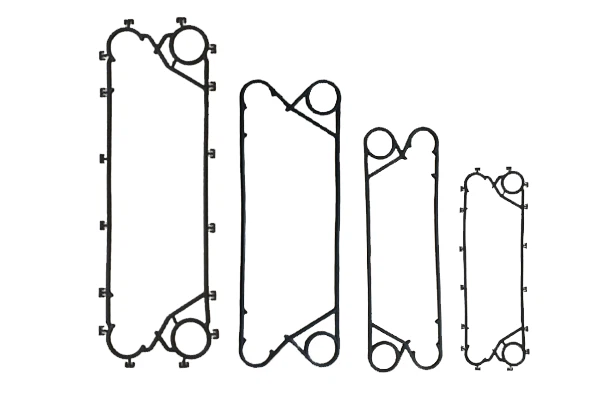
Can be divided into floating head heat exchangers, fixed tube plate heat exchangers, U-shaped tube plate heat exchangers, plate heat exchangers, etc.
Industry status
Heat exchangers in petroleum, chemical, light industry, pharmaceutical, energy, and other industrial production, are often used for low-temperature fluid heating or high-temperature fluid cooling, liquid vaporization into steam, or steam condensation into liquid.
Heat exchangers can be a unit of equipment, such as heaters, coolers condensers, etc.; but also process equipment components, such as ammonia synthesis tower heat exchangers. The heat exchanger is an important unit of equipment in chemical production, according to statistics, the tonnage of the heat exchanger accounts for about 20% of the entire process equipment some even up to 30%, so its importance can be imagined.