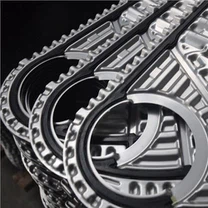
The key to the selection of a plate heat exchanger is to understand the core parameters such as its material, working pressure, design temperature, media characteristics, and economy. In the same resistance loss, obtaining the highest heat transfer coefficient is also an important indicator to evaluate its performance. Plate type selection

The choice of plate type or corrugated type should be decided according to the actual situation of the heat transfer scene. If the flow rate is large and the allowable pressure drop is small, then the plate type with small resistance should be selected, and vice versa, the plate type with large resistance should be chosen. At the same time, according to the pressure and temperature of the fluid, to determine the choice of removable or brazed type. When selecting the plate type, you should avoid selecting plate pieces with too small a veneer area. Because the single plate area is too small, the number of plates is large, the footprint is large, and the flow rate between the plates is small, resulting in too low a heat transfer coefficient; on the contrary, the single plate area is too large, the number of plates is small, the footprint is small, but the resistance drop increases, and it is difficult to ensure a proper flow rate between the plates. For larger heat exchangers, this issue requires more attention. In general, the veneer area can be considered according to the corner hole flow rate of about 6m/s. Flow and flow channel selection
Flow refers to the same fluid within the plate heat exchanger in the same direction of flow of a group of parallel flow paths, while the flow path refers to the plate heat exchanger in the two adjacent plates composed of media flow channels. Usually, there will be several flow paths connected in parallel or in series to form different combinations of hot and cold media channels. The form of flow combination should be based on heat transfer and fluid resistance calculations, to meet the requirements of the process conditions to determine. When the two sides of the fluid flow are roughly equivalent, one should try to arrange according to the same range; the flow rate difference is large, the flow rate of the small side of the multi-process arrangement, or the use of unequal cross-section channel plate heat exchanger. In addition, when the temperature rise or temperature drop of a medium is large, can also be used in multiple processes. There is a phase change that occurs on the side of the general a single process, and the interface for the upper inlet and lower outlet. In the multi-process heat exchanger, the same fluid should be used in each process with the same number of flow channels. Heat exchanger pressure drop correction factor, a single process to take 1.2 ~ 1.4, 2 ~ 3 processes to take 1.8 ~ 2.0, 4 ~ 5 processes to take ~ 2.6 ~ 2.8. Selection of the flow rate between the plate
The flow rate between the plates influences the heat transfer performance and pressure drop. We should try to make the side with a small heat transfer coefficient get a large flow rate, and at the same time make the heat transfer coefficient of both sides of the two fluid heat transfer surfaces equal or similar, to get a higher heat transfer coefficient, to achieve the best heat transfer effect. A high flow rate, and a high heat transfer coefficient, but the resistance drop also increases; conversely, the opposite. Generally, take the flow rate between the plates for 0.2-0.8m/s, and try to make the two fluid plate speeds consistent. The flow rate of less than 0.2m / s, the fluid can not reach a turbulent state, and will produce a large dead zone; a flow rate is too high will lead to a sharp increase in drag-drop, and the gas flow rate between the plates is generally not greater than 10m / s. Selection of the flow direction
In single-phase heat transfer, countercurrent has the largest average temperature difference, so in the design of the plate heat exchanger, we should be as much as possible to arrange the fluid for countercurrent. When the fluids on both sides are equal flow, it is counterflow; when the fluids on both sides are unequal flow, the downstream flow alternates with counterflow, and the average temperature difference is smaller than that of pure counterflow. Pressure drop calibration
In the plate heat exchanger design selection, we generally have certain requirements for the pressure drop, so it needs to be calibrated. If the calibration pressure drop exceeds the allowable pressure drop, need to re-design selection calculations, until to meet the process requirements. Calculation of heat transfer coefficient and pressure drop are usually calculated from the performance curve of each manufacturer's product. The performance curves (guideline correlations) are generally derived from product performance tests. For the lack of performance testing of the plate, but also through the reference size method, according to the characteristics of the plate geometry of the plate to obtain the norms associated with the plate, some of the international general software is used in this way. Other Precautions
1, containing sediment dirty fluid should be filtered into the heat exchanger.
2, the temperature difference between the smaller side of the fluid interface flow rate should not be too large, and should be able to meet the requirements of the pressure drop.