Looking back to tradition: In-depth deconstruction of rubber gaskets Rubber, a complex and exquisite polymer system, is like a microscopic "chemical factory", carefully constructed by multiple components such as rubber polymers, vulcanizers, fillers, antioxidants, and processing aids. The raw material rubber polymer just out of the "factory" has a molecular chain that is like a pile of loose sand and has not yet been cross-linked to form a stable three-dimensional network structure. Vulcanizers such as sulfur and organic resins are like magical "architects". Under the catalysis of heat, they cause the molecular chains to interweave and link with each other to build an indestructible network structure. In the meantime, carbon black, as a commonly used reinforcing filler, is like injecting a "primordial force" into the rubber gasket, which can not only significantly enhance its physical properties, making the gasket excellent in compression resistance and wear resistance, but also like a careful "steward", cleverly reducing production costs. At the same time, anti-aging agents are like loyal "guards", standing up to fight against environmental "invaders" such as heat and oxygen, protecting the life of the gasket and extending its service cycle; processing aids are like smart "lubricants", optimizing every link in the manufacturing process, making mixing, extrusion, molding and other processes smoother and more efficient.
On the stage of manufacturing process, each step is like a carefully choreographed "dance". After the raw materials are accurately weighed, they start the "fusion journey" in the rubber mixer, interweaving and penetrating each other, and finally making a uniform and delicate mixed rubber. According to the specific specifications of the gasket, the extruder is like a skilled craftsman, carefully shaping the rubber into a cylindrical rubber strip blank. The molding process is even more critical. The semi-finished product is gently placed in the hot mold cavity and vulcanized for 3-15 minutes in the "warm embrace" of 160-185℃, bearing the "test" of a pressure of not less than 9.8MPa, completing a gorgeous transformation. In order to play the "exciting movement" of increased production capacity, part of the vulcanization process is moved to the oven. The oven is like a rigorous "temperature control master" to ensure uniform and constant temperature, and is equipped with a continuous temperature recording device to monitor the vulcanization process in real time. Until the end, the finished product is like a soldier undergoing "inspection". It undergoes all-round testing in the laboratory in accordance with the standards to ensure flawless quality.
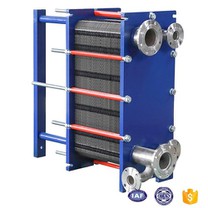
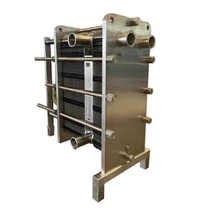
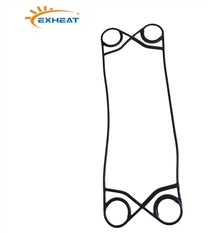
From the perspective of sealing principle, the rubber gasket of the plate changer is like two "dancers" with different styles compared with the common rubber O-ring. The sealing effect of the plate changer depends on the "power game" between the sealing stress generated by the compression of the rubber gasket and the operating pressure. Only when the sealing stress is superior can it hold its ground and prevent leakage. Rubber, as a unique viscoelastic material, also has "growing pains" - stress relaxation. Among them, physical relaxation is like an "elegant rearrangement" of molecules and filler particles in the microscopic world. As time goes by, they gradually tend to balance and outline a linear trajectory with the logarithm of time; chemical relaxation is like a "fierce fission" of chemical bonds, and oxidation and temperature are like the "pusher" behind the scenes, accelerating this change. Temperature is undoubtedly the key "baton" that affects the life of the gasket. Low-temperature nitrile is at ease in the low-temperature range. Once the temperature rises, stress relaxation will deteriorate sharply; while high-temperature fluororubber is like a "darling" in a high-temperature environment, calmly responding to high-temperature challenges. During the long years of alternating hot and cold temperatures, the stress of the gasket fluctuated repeatedly, and the physical properties also fluctuated accordingly, until the sealing stress could no longer be sustained and leakage problems quietly emerged, announcing the end of the gasket's mission.
Focus on the present: the bright dawn of new materials Looking back at last year, the scientific research field was like an innovative "magic workshop". In order to overcome the many difficulties of traditional rubber gaskets, R&D personnel devoted themselves to research and ingeniously launched a series of impressive new composite materials.
Look, in the "palette" of the basic rubber formula, nano-scale silica particles are innovatively incorporated, instantly giving rubber extraordinary wear resistance and high temperature resistance "magic". These nano-scale elves are evenly dispersed in the rubber matrix, like building a stable "microscopic skeleton", so that the gasket is still as solid as a rock under the "roasting" of high temperature. After rigorous testing, its wear rate is significantly reduced by about 30% compared with traditional gaskets, as if it has undergone a "slimming exercise", and it stands proudly at the forefront of high temperature conditions with excellent durability.
At the same time, the intelligent self-healing rubber material is like a "magic knight" with "self-healing superpowers" and shines on the stage. Microcapsules are cleverly hidden inside. When tiny cracks accidentally appear on the gasket during operation, these microcapsules are like sensitive "sensing guards" that instantly burst and release the repair agent to automatically and accurately fill the cracks and inject endless vitality into the gasket. This magical operation nearly doubles the anti-fatigue performance of the gasket and greatly extends its service life, especially in the plate exchanger working conditions of frequent start-stop and pressure fluctuations. It is like a fish in water and can handle it with ease, providing a solid guarantee for the stable operation of the equipment.
Looking to the future: Advanced codes for material selection and manufacturing Looking to the future, the field of rubber sealing gaskets for plate heat exchangers is like a huge ship sailing far away, riding the wind and waves, heading for the vast ocean of innovation. In this journey full of challenges and opportunities, accurately grasping the characteristics of new materials, continuously optimizing manufacturing processes, and always adhering to the concept of rigorous material selection are undoubtedly the "compass" to control the direction.
The material selection process is like a prudent "talent selection", which needs to rely on rich industry experience and massive test data as a solid backing. Like a "detective" with insight into the slightest details, carefully consider the key parameters of the plate heat exchanger, such as the operating temperature, pressure, and corrosiveness of the contact medium. For example, in the chemical industry, a battlefield full of "chemical smoke", acid and alkali media are rampant. At this time, it is necessary to use the "artifact" of chemical corrosion resistance - fluororubber or special modified rubber to resist erosion and hold the position; and in the food and beverage industry, a "pure world" related to people's livelihood, non-toxic materials that meet hygiene standards become the first choice, and food-grade silicone is like a "guardian angel" to ensure the purity of the product.
The upgrade of manufacturing technology is an all-round "technological change". In the mixing stage, high-precision automatic weighing and intelligent monitoring systems make their debut. They are like accurate "balances" and sharp "eagle eyes", ensuring that the raw material ratio is exactly the same and guaranteeing quality from the source; the molding process adopts advanced temperature control molds, and the temperature uniformity reaches an unprecedented level. The pressure control is as accurate as a "magic doctor", and the defective rate is as if it encounters a "cold current", which is greatly reduced; the post-vulcanization oven is gorgeously upgraded to a "technological fortress" with programmable intelligent temperature control. According to the unique "personality" of different mixed rubbers, the insulation curve is tailored and optimized to build a solid defense line for vulcanization quality; the finished product inspection introduces non-destructive testing and microstructure analysis technology, just like putting a pair of "perspective glasses" on the finished product, controlling the quality in all directions and without blind spots to ensure that every gasket is perfect.
The field of rubber sealing gaskets for plate heat exchangers is continuing to innovate with a vigorous momentum. Only by firmly grasping the characteristics of new materials, carefully carving out the manufacturing process, and rigorously and prudently selecting materials can the plate heat exchanger shine brightly on the stage of heat exchange in various scenarios such as industry and civil use, operate stably and efficiently, lay a solid foundation for global energy utilization and comfortable life, open a new chapter of more energy-saving and reliable heat exchange, and advance boldly towards the infinite possibilities of the future.