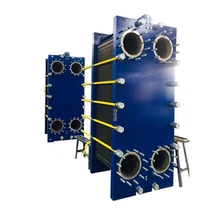
Precautions:
I. Regular inspection and treatment methods:
1. Check the heat exchanger for leakage and record and analyse the cause.
a. Seal gasket broken - replace the new gasket
b. Seal gasket pressure dislocation - re-reset
c. Loose fastening bolts - re-tightening
d. Heat exchanger plate deformation - replace the new plate
2, check whether the heat exchanger heat transfer capacity decline, and record and analyse the reasons.
a. Check the pressure loss - if there is no pressure loss, the situation is generally clogging, flow, clogging solution is to open the heat exchanger to clean up and then re-installed for use. The solution for clogging is to open the heat exchanger and clean it before re-installing and using it.
b. Check the temperature change - such as the temperature does not meet the requirements for use, the first step first check the pressure loss as above and solve the problem. The second step to check both sides of the flow and inlet temperature to meet the design requirements and adjusted to the actual requirements. The third step of the above exclusion, requesting the manufacturer site survey.
Heat exchanger follow the law of conservation of energy, just conduct heat and do not do work, so both sides of the energy to match. In addition, the medium is special, easy to clog and easy to scale, so you need to regularly use water flushing, flushing frequency according to the use of conditions such as heat transfer capacity down to can not meet the use of it. And follow the principle of shutdown must be flushed to prevent dry scaling and biological reaction. Maintenance and cleaning points are explained below:
1
Exterior inspection upon disassembly. In order to determine the overall corrosion and deterioration of each part, it is necessary to check the degree of contamination and the adhesion of water rust immediately after dismantling, and to take samples for analysis and experimentation as necessary.
2
Cleaning of the heat exchanger. Firstly, we carefully remove the gaskets from each plate, and when removing the rubber gaskets we take appropriate protective measures to prevent damage to the gaskets. Next, we place the plates in a specialised cleaning unit, where each step is strictly controlled to ensure that the plates are cleaned thoroughly. Depending on the medium and degree of fouling, the cleaning method can be chemical, physical, combined chemical and physical or CIP.
3
DPT test is done on the cleaned plates. Using the colour penetration test method, do a rigorous inspection and confirm the fault, to be repaired to ensure that the plate is like a new factory plate does not have cracks, corrosion spots and other defects. After the colour penetration test, the plate will be thoroughly cleaned again with penetrant, and after cleaning, the plate will be blown dry with compressed air.
4
Assembly, reset and test. The heat exchanger after cleaning and checking or maintenance and repair is assembled and reset in accordance with the assembly sequence and essentials, while the pressure resistance test is conducted to check whether it is abnormal.