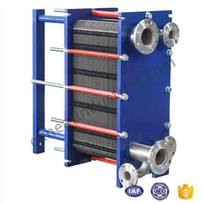
A chiller that utilizes a plate heat exchanger to transfer heat between two fluids is known as a plate heat exchanger chiller. The plate heat exchanger is made up of a sequence of slender, wavy plates that are placed on top of one another, with one set of plates carrying the fluid to be cooled and the other set carrying the cooling fluid. This design permits effective heat transfer and a smaller size, which has made plate heat exchanger chillers a prevalent option for a variety of purposes.
Plate heat exchanger chillers are characterized by their high efficiency, compact design, and low maintenance requirements. They can also accommodate a wide range of flow rates and temperatures, making them suitable for use in a variety of industries, including HVAC, industrial processes, and refrigeration.
In general, plate heat exchanger chillers offer several advantages over other types of chillers, including higher efficiency, lower maintenance requirements, and smaller size. As a result, they are widely used in a variety of industries and applications. In the future, plate heat exchanger chillers will continue to evolve towards greater efficiency, lower costs, and greater versatility, and will gradually be used in the renewable energy sector.
When using a plate heat exchanger chiller, there are several important considerations to keep in mind. First, it is important to ensure that the fluids being used are compatible with the materials used in the heat exchanger plates. Incompatible fluids can cause corrosion or other damage to the plates, which can reduce the efficiency of the chiller and lead to maintenance issues.
It is also important to ensure that the chiller is properly sized for the application. Undersized chillers may not be able to provide sufficient cooling, while oversized chillers can be inefficient and lead to higher energy costs.
In terms of future developments, plate heat exchanger chillers are likely to continue to evolve in several key areas. One area of focus is on improving efficiency, with manufacturers looking for ways to further reduce energy consumption and improve overall performance.
Another area of focus is on reducing maintenance requirements and increasing reliability. This may involve the use of more durable materials or the development of new maintenance techniques that can help extend the lifespan of the chiller.
Finally, plate heat exchanger chillers are likely to continue to find new applications in a variety of industries, including renewable energy and waste heat recovery. As these industries continue to grow, there will be increasing demand for efficient and reliable cooling technologies, and plate heat exchanger chillers are well-positioned to meet this demand.
Hot Tags: plate heat exchanger chiller, China, suppliers, manufacturers, cheap, pricelist, low price, for sale, oil cooler plate heat exchanger, 90 kw plate heat exchanger, plate heat exchanger kw, bosch gb162 plate heat exchanger 80 100w, 80kw plate heat exchanger, 150k capacity heat exchanger