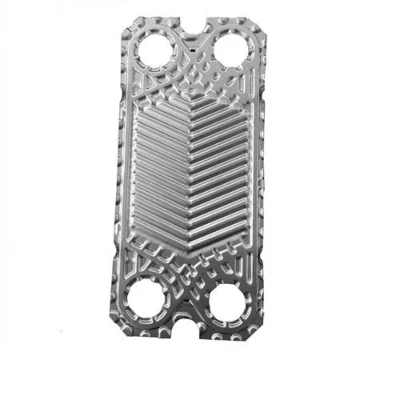
For most of us, plate heat exchangers may not be unfamiliar, but the production process may be unclear. Today, I will explain to you the production process of the plate heat exchanger, so that you can better understand it.
1. Design and selection: Before production and processing, we need to select the heat exchanger, mainly to determine the plate model of the heat exchanger. Regarding the selection, you can search for Kangjinghui plate heat exchanger on Baidu. We will not repeat them here.
2. Plate processing: After the plate model is selected, plate processing is required, mainly by pressing the corresponding corrugations on the plate through the punching process. It should be noted that the plate pressing must be formed at one time to ensure the quality of the plate.
3. Assemble the plate heat exchanger: wipe the parts clean, wipe the residual glue in the groove before bonding the sealing gasket to the groove, apply the synthetic resin adhesive to the plate, and then press into the sealing gasket. The plates should be alternately rotated 180° for stacking, and no wrong installation is allowed. The clamping bolts should be tightened until the length of the plate bundle reaches the calculated value.
4. Stamping and shaping: press the installed plates to make full contact between the plates and the joining materials between the layers.
5. Welding process: According to the different requirements of customers, different types of interfaces and accessories are welded to the plate heat exchanger.
6. Leak detection and pressure test: The plate heat exchanger is evacuated to a vacuum state for leak detection. The leak-tested plate heat exchanger needs to undergo a pressure test higher than the customer's requirement. The test method is generally nitrogen pressure, and then put it into the water tank to maintain the pressure to check for leaks.
7. Drying and packaging: qualified products after high-standard inspections are dried to remove moisture and impurities, and finally packaged and shipped out of the factory.
The above is the production process of the plate heat exchanger explained by the manufacturer. I hope that after reading this article, everyone will have more understanding of the plate heat exchanger.5. Welding process: According to the different requirements of customers, different types of interfaces and accessories are welded to the plate heat exchanger.
6. Leak detection and pressure test: The plate heat exchanger is evacuated to a vacuum state for leak detection. The leak-tested plate heat exchanger needs to undergo a pressure test higher than the customer's requirement. The test method is generally nitrogen pressure, and then put it into the water tank to maintain the pressure to check for leaks.
7. Drying and packaging: qualified products after high-standard inspections are dried to remove moisture and impurities, and finally packaged and shipped out of the factory.
The above is the production process of the plate heat exchanger explained by the manufacturer. I hope that after reading this article, everyone will have more understanding of the plate heat exchanger.