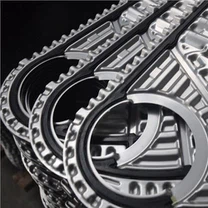
Heat exchanger is widely used in heating and cooling systems, common types of heat exchangers are mainly shell and tube, volumetric, spiral, plate, casing type heat exchanger. Plate heat exchanger special corrugated shape of the metal plate structure, so that the internal body of strong turbulence, can strengthen the two sides of the fluid heat transfer, with a high heat transfer coefficient, adaptability, compact structure, cleaning and dismantling of convenient, flexible assembly advantages.
1 plate heat exchanger structure features briefly
Plate heat exchanger mainly includes heat exchanger plate, gasket, fixed cover, clamping bolts and other major components.
Heat exchanger plate is a set of typical mesh flow plate, flexible with each other, the common plate has a zigzag, spherical, straight waveforms, and so on. Between the plate by the gasket for separation, two kinds of fluid (fluid A, fluid B) in their respective pipeline flow and heat exchange between the heat exchanger plate.
2 plate heat exchanger operation process common problems
Plate heat exchanger is widely used, high efficiency, but the structure of the equipment also leads to the heat exchanger plate between the narrow easy to block, plate damage, gasket service life and other issues, resulting in decreased efficiency, there are security risks. Plate heat exchanger in the use of common problems mainly include the following points.
Gasket damage, aging. Common plate gasket for rubber and other materials, long-term use needs to be replaced regularly, otherwise it may lead to rubber aging, sealing is not tight, fluid string liquid phenomenon.
Loose parts such as fixed cover plates and clamping bolts may lead to fluid leakage.
Scaling within the plate. Scale on the plate heat exchanger plate heat transfer has a great impact on the water quality is not qualified, the fluid in the magnesium, calcium, carbonate and other reactions to generate precipitates attached to the paste on the plate, or the presence of mechanical impurities may lead to scaling within the plate.
Plate breakage. Heat transfer fluid there may be large particles of impurities, such as sand, rust, etc. attached to gather in the plate and gasket, may be due to sudden changes in system pressure, fluid corrosion or fatigue cracks in the metal plate sheet and so on, resulting in heat transfer plate breakage.
Pipe corrosion. Plate heat exchanger often have high and low temperature fluid, usually internal corrosion is light, long-term operation of the joints, the outer pipeline may appear corrosion, need to regularly carry out pipeline corrosion prevention and maintenance of the outer insulation.
Improper operation of the operator. Not strictly in accordance with the procedures, such as equipment disassembly gasket installation, heat exchanger plate piece misinstallation may lead to a decline in efficiency.
3 plate heat exchanger cleaning and maintenance examples
3.1 The basic situation of the project
Museum of Science and Technology of China plate heat exchanger a total of 3, installed in the first floor refrigeration room, heat exchanger fluid on both sides: glycol solution import and export temperature were 2.5 ℃ / 11.3 ℃, chilled water import and export temperature were 13.3 ℃ / 4.5 ℃, the equipment is effective plate 423 pieces. In order to ensure the normal and efficient operation of the equipment, a combination of daily maintenance and regular cleaning maintenance system is adopted. The pressure and temperature of the fluid side of the equipment are recorded regularly on a daily basis.
3.2 Regular cleaning
(1) Cleaning procedure: cleaning agent selection → disassembly → cleaning → drying → assembly → commissioning.
(2) Cleaning technology points.
Cleaning agent selection. Select the appropriate cleaning agent, cleaning process cleaning agent used shall not damage, destroy the gasket and stainless steel plate sheet surface passivation film, shall not use chlorinated acid (such as hydrochloric acid) cleaning equipment, descaling pickling can be used nitric acid and so on.
Disassembly. Before disassembling the plate heat exchanger unit, the system pressure relief must be completed, while the internal fluid temperature of the plate heat exchanger is reduced to below 40 ℃. When disassembling the plate heat exchanger plate piece must keep the diagonal bolts in the original position, and then remove the remaining bolts, the equipment is disassembled when the fixed compression plate and the movable compression plate and the plate bundle are not separated. The plates are neatly arranged and labeled after removal to facilitate later assembly.
Cleaning. The plates can be rinsed with high pressure washer, soft brush, etc. No hard friction agent such as sand should be used. Soak the plate in the cleaning solution for about 12h to remove the thicker surface scale. Rinse and clean with water after immersion. The used cleaning waste liquid needs to be transported to the designated location for disposal.
Drying. After the plates have been left to dry completely, the gaskets are fitted and the assembly can only be carried out afterwards.
Assembly. Before assembly, check that the gaskets are securely installed, that the plates are cleaned, and that the plates are not damaged. Assemble and press according to the labeling of the plate, and prevent backward assembly.
Commissioning. Check for leakage before startup. Even if there is a small amount of leakage during the initial startup, the leakage will stop after normal operation.
3.3 Material Replacement
In order to prevent fluid leakage and other failures, it is necessary to periodically replace all the gaskets and other wearable parts, and partially replace the plates, bolts and other worn and corroded parts according to the site conditions.
3.4 Insulation and anti-corrosion maintenance
Plate heat exchanger pipes and equipment need to be covered in the external insulation layer to reduce heat loss and prevent condensation on the external surface. Regular daily inspection of insulation, anti-corrosion and protective layer, dismantling of equipment after the metal base and frame for anti-corrosion inspection and rust removal, thermal insulation and cold insulation using B1 grade rubber insulation cotton, the protective layer can be used with a thickness of 1.2 mm rolled aluminum plate.
4 Conclusion
In order to avoid problems such as poor fluid water quality on the operation of heat exchanger equipment safety and efficiency, China Science and Technology Museum plate heat exchanger on both sides of the fluid in the chilled water using treated softened water, glycol solution using 25% glycol and 75% distilled water, but the actual disassembly and maintenance of the heat exchanger plate plate is still found on a small amount of scale, sludge and mechanical impurities and other debris, the individual plate appearing in the eye of the sand, the outer frame metal area of the equipment corrosion. Corrosion in the metal area of the outer frame of the equipment.
In accordance with the operating procedures for the correct operation of the plate heat exchanger, understand the common equipment failure, regular cleaning, gasket replacement and maintenance is necessary.