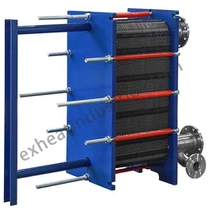
1. High flexibility
Gasketed heat exchangers are highly adjustable, so you can get the exact design and performance you need according to your requirements. As the number of plates and the installation of plates can be adjusted, if you need to expand the capacity or realise that some data is not in line with the original design data, you can ask us for help, and we can adjust the number of plates or the installation to meet your new needs.
2. High Convenience
How often you need to service your plate heat exchanger depends on several factors:
● The manufacturer you choose
● The application of the plate heat exchanger
● The intensity and frequency of the plate heat exchanger's operation
But it's not uncommon for a well-designed gasketed heat exchanger to last about 15 years before needing repair.
Gasketed heat exchangers are very easy to repair and replace parts, and have significant advantages over the lighter brazed plate heat exchangers. A brazed heat exchanger may cost less to purchase, but since refurbishment is not profitable, you will have to repair it yourself or buy it new, whereas a gasketed heat exchanger is made for easy cleaning and replacement parts, which is a wonderful experience compared to a brazed heat exchanger.
3. High Compactness
Since the gasketed heat exchanger is assembled from corrugated plates, the fluid flows more turbulently inside the heat exchanger, making it more efficient in heat transfer, and thus the area is very small, so the gasketed heat exchanger is more compact and smaller than the shell and tube heat exchanger. In some cases, gasketed heat exchangers may be too large and bulky, but brazed heat exchangers are usually the same size, and in addition brazed heat exchangers do not have a comparable calibre range to gasketed heat exchangers due to machining limitations.
4. Highly applicable
Gasket plate heat exchangers are versatile and can handle various types of liquids. For example, heat exchange of water and glycol solutions. However, brazed heat exchangers cannot achieve the high suitability of gasketed plate heat exchangers, and brazed heat exchangers are far less resistant to chlorides than gasketed plate heat exchangers. Therefore, the choice of the appropriate heat exchanger should be determined by the specific requirements of the application.