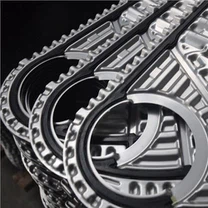
1. Isolate the equipment system and drain the water in the heat exchanger.
2. After cleaning the silt, algae and other impurities in the pipeline with high pressure water, the system is closed.
3. Install a ball valve (not less than 1 inch = 2.54 cm) between the isolation valve and the exchanger, and both the water inlet and the return port should be installed.
4. Connect the delivery pump and the connecting pipe so that the cleaning agent is pumped in from the bottom of the heat exchanger and discharged from the top.
5. Start pumping the required cleaning agent into the heat exchanger (the ratio can be adjusted according to the specific situation).
6. Repeat the cleaning cycle to the recommended cleaning time. As the circulation progresses and the deposits dissolve, the gas produced during the reaction will increase, and the excess air should be discharged through the air release valve at any time. As the air is discharged, the space in the heat exchanger will increase. Appropriate water can be added. Do not inject a large amount of water at the beginning, which may cause water overflow.
7. The effectiveness of the cleaning agent should be checked regularly during the cycle, which can be measured with pH test paper. If the solution is maintained at a pH value of 2-3, the cleaning agent is still effective. If the pH value of the cleaning agent reaches 5-6, you need to add an appropriate amount of cleaning agent. The pH of the final solution remained unchanged for 30 minutes at 2-3, which proved that the cleaning effect was achieved. Note: The cleaning agent can be recycled and reused, and the discharge will cause waste.
8. After the cleaning time is reached, the cleaning solution is recovered. And rinse the exchanger repeatedly with clean water until it is clean and neutral. Use a pH test paper to measure the pH value of 6-7.
9. After cleaning, it can be turned on and run. You can also press test to see if there is any leakage. If there is a leak, polymer composite materials can be used for repair and protection, and the service life of the equipment can be greatly extended.
⒑ After the equipment is stable, write down the current medium flow rate, working pressure, heat exchange efficiency and other data.
⒒ Comparing the changes in the values before and after cleaning, we can calculate the electricity, coal, and other production costs that the company has saved every hour and the increased work efficiency. This is exactly the value compensation for the company's application of technology.
12. The same method of operation can also be used to clean condensers and frame heat exchangers.
⒔ If the company needs equipment for passivation pre-filming treatment, it can operate according to the following process: pump the passivation pre-filming agent into the equipment according to the recommended dilution ratio (at the same time hang the test piece in the circulation tank); cycle and soak according to the recommended time ; Detect the effect of pre-filming (red dot method or blue dot method); discharge; rinse with water to neutral (measure PH value 6~7 with pH test paper).
⒕ After the passivation pre-filming is finished, it is best to use a fan and other ventilation equipment to dry the system to ensure and improve the passivation pre-filming effect.