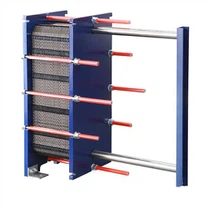
What are the application advantages and precautions of plate heat exchangers in the beer brewing industry? Find out!
Beer, as a long-standing alcoholic beverage, has won the favor of consumers around the world for its unique taste and rich flavor. From ancient brewing technology to modern production technology, the beer production process has undergone earth-shaking changes. Among them, plate heat exchangers play a vital role in beer production, safeguarding the quality and taste of beer.
A heat exchanger, as the name suggests, is a device used to achieve heat exchange. In the beer production process, plate heat exchangers are mainly used for heating and cooling wort, as well as temperature control during fermentation. I am very happy to share with you the application and advantages of plate heat exchangers in the beer production process, as well as precautions..
Application and advantages
Application and advantages of plate heat exchangers in the beer production process:
Rapid cooling of wort
---After the saccharification process, the wort needs to be quickly cooled to the fermentation temperature. The use of plate heat exchangers can achieve efficient progress in this process. For example, a typical plate heat exchanger can cool wort from 95°C to 20°C in just a few minutes, which is the ideal temperature for yeast fermentation. Rapid cooling not only prevents bacterial growth, but also preserves the flavor and aroma in the wort.
Temperature control during pasteurization
--Before beer is bottled, pasteurization is usually required to eliminate bacteria and ensure the hygienic safety of the product. The role of the plate heat exchanger in this process is to accurately control the temperature. For example, beer needs to be kept at a temperature of 60°C to 80°C for a certain period of time to achieve the sterilization effect. The plate heat exchanger can ensure that the beer is heated evenly within this temperature range, avoiding overheating or underheating, thereby protecting the flavor and nutrients of the beer.
Temperature management during fermentation
--Fermentation is one of the most critical steps in beer production. The activity of yeast at different temperatures can significantly affect the flavor and alcohol content of the beer. Plate heat exchangers can be used to control the temperature of the fermentation tank to keep it within the optimal fermentation temperature range. For example, for pale lager, the fermentation temperature is usually controlled at 10°C to 15°C, while the fermentation temperature for ale is between 18°C and 22°C. Plate heat exchangers can effectively regulate these temperatures to ensure that the yeast can ferment in the best condition.
Improved energy efficiency
---Plate heat exchangers can significantly reduce energy consumption due to their efficient heat transfer capacity. For example, in the cooling process, the use of plate heat exchangers can reduce the amount of refrigerant and speed up the cooling speed. This not only reduces the cost of beer production, but also meets the requirements of sustainable development and is environmentally friendly.
Easy to clean and disinfect
---Due to the structural design of plate heat exchangers, they are usually easy to clean and disinfect. In beer production, hygienic conditions are crucial. This feature of plate heat exchangers makes them an ideal choice for maintaining the hygiene of the production process. For example, the plates of plate heat exchangers can be easily disassembled for thorough cleaning and inspection.