Today, from the design structure, structural advantages, working principle, applicable medium and application field of these five aspects, talk about the wide runner plate heat exchanger details you do not know.
First, design structure
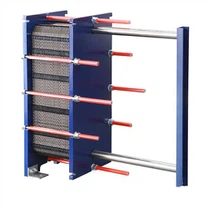
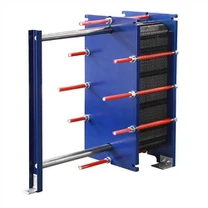
The plate is composed of heat exchange core, shell, pressure plate, supporting plate, baffle, end plate, flange, clamping stud, bracket and other components. Almost the entire surface of the metal plate of the wide channel heat exchanger is used for heat transfer, so the metal materials used can be fully utilized. It is designed with no flow dead zone and provides very rapid heat transfer at low pressure, thus achieving very small temperature difference heat transfer requirements.
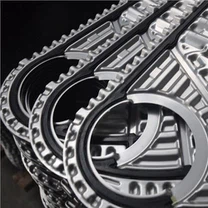
The arrangement of Exheat wide channel heat exchanger plate forms an oval pipe on the side of the tube flow and an S-shaped channel on the side of the plate. The ripple depth of the plate can be adjusted as required to meet the requirements of large flow, low pressure drop or large particles in the fluid.
Second, structural advantages
1. There is no metal contact point between the plate and the S-shaped runner: the outline of the plate is basically composed of horizontal ripples, and the medium can flow through the heat exchange surface of the plate unimpeded without blocking.
2, plate type adopts special coarse corrugated structure design, the width of the channel between the plates can be up to 6-16mm, super wide channel heat exchanger channel between the plates can be up to 30mm.
3, the channel is unobstructed, the fluid is unobstructed, there is no stagnation area, no dead zone, no blockage: there is no obstacle between the channels. Even if the pulp fiber contained in the juice is 12mm long and the content is 20%, it can run smoothly.
4, effectively prevent solid particles and suspended solids deposition and blockage.
5. High heat transfer efficiency, small pressure loss, gentle treatment of heat-sensitive products: the pressing form of the plate ensures that the fluid can produce high turbulence at low flow rate, and the heat transfer coefficient is much higher than that of the shell and tube heat exchanger.
6, light weight, low cost, effectively improve the equipment economy.
7, convenient installation and disassembly, good washable, can shorten the cleaning time.
Three, the working principle
Wide channel heat exchanger compared with the general plate heat exchanger, plate spacing is larger, single channel cross-sectional area is large, because the plate spacing is larger, so the single channel cross-sectional area between the plates is much larger than the general plate heat exchanger, which has obvious advantages for some large viscosity liquid and medium flow conditions, cold fluid side between the plates has been formed to accompany you through the contact medium flow, The hot fluid side forms a non-contact medium channel between the plate groups, containing solid particles through smoothly, so the pressure loss is small and the fluid distribution is uniform.
Four, applicable media
Solid media: sediment, crystal, paper black liquor, domestic sewage, industrial wastewater;
Fiber medium: chemical fiber, straw, wool wool, biogas slurry, juice, press juice;
Viscosity media: syrup, fermentation liquid, protein pulp, kitchen leachate, viscose.
5. Application field
Wide channel plate heat exchanger is widely used in sewage waste heat recovery, wine, sugar, food, beverage, fermentation, printing and dyeing, electric power, metallurgy, breeding, slaughtering, textile and paper industries.
1. Coal industry: can be used as coal washing water heat exchanger and mine water heat exchanger, used for coal washing wastewater and mine water source heat exchanger, effectively prevent clogging;
2. Sugar production/fermentation industry: solid solute dissolution process heating, forced circulation evaporation heating, mixed juice/saccharification liquid/fermentation liquid heat exchange, waste honey cooling, starch pulp or starch milk heat exchange, juice heat exchange, etc.;
3. Domestic/industrial wastewater: sewage heat recovery, wastewater cooling and cooling, landfill leachate heat transfer, kitchen wastewater leachate heat transfer, biogas slurry sewage heat transfer, etc.;
4. Aquaculture industry: biogas slurry wastewater treatment heat exchanger, aquaculture wastewater heat exchange, cow dung water treatment heat exchanger, etc.