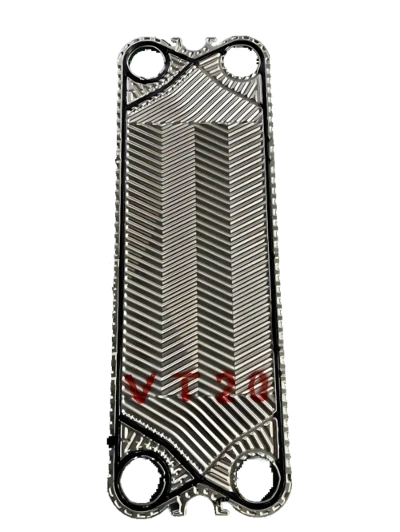
If you think a plate heat exchanger only needs a quiet place to operate steadily in order to have a long service life, you are mistaken. To ensure that it performs well and operates reliably for a long time in a heat exchange system, water quality is extremely important.
Once certain undesirable substances are present in the water, the heat exchanger may experience a range of problems. Not only can its heat transfer efficiency decline rapidly, but equipment aging may also be accelerated, leading to more frequent failures.
So, what type of water quality can cause the most serious damage to a plate heat exchanger? After reading this article, you will have a better understanding of how to protect your heat exchanger through proper water quality management.
I. Corrosive Water: Accelerating the Aging of Plate Heat Exchangers
Did you know that corrosive water is one of the major threats to plate heat exchangers? Certain chemical components in water, especially highly corrosive ions, can gradually cause serious damage to the metal components of a heat exchanger.
Among them, chloride ions and sulfates are two important factors that can contribute to corrosion.
1. Chloride Ions: High Penetration and Rapid Metal Corrosion
Chloride ions have strong corrosive activity and can penetrate protective layers on metal surfaces, potentially causing localized corrosion. Once chloride-related corrosion pits form on the metal plates of a plate heat exchanger, the metal surface can suffer noticeable damage.
This not only affects heat transfer performance but may also shorten the service life of the equipment.
2. Sulfates: Accelerating Metal Corrosion and Damaging Plates
Sulfates are another component that may contribute to corrosion. When water contains excessive levels of sulfates, they can participate in chemical reactions at metal surfaces and contribute to corrosion.
This corrosion process can make the plate surface rougher and may reduce the strength of the plates, ultimately affecting the operating performance of the equipment.
II. Hard Water: Scale Buildup Reduces Heat Transfer Efficiency
Do you know how harmful hard water can be to a plate heat exchanger? In many cases, calcium and magnesium ions in hard water combine with carbonate ions in the water and form scale.
Although scale may appear harmless at first, it can become a major cause of reduced heat transfer performance in plate heat exchangers. Let's take a closer look.
1. Scale Buildup: Creating Thermal Resistance and Reducing Heat Transfer Efficiency
The most direct consequence of scale buildup is the formation of a thermal resistance layer, which seriously affects heat transfer.
As the scale layer becomes thicker over time, the heat transfer capacity of the heat exchanger can decrease significantly. This reduces the operating efficiency of the system and may even cause the system to become overloaded.
2. Higher Maintenance Costs and More Frequent Cleaning
When scale buildup becomes severe, a plate heat exchanger may require more frequent cleaning.
Cleaning takes both time and labor and also increases maintenance costs. If scale is not removed in time, both the performance and service life of the heat exchanger can be seriously affected.
III. Water Containing Impurities: Blocking Flow Channels and Damaging the System
In industrial heating systems, especially heating stations, another important aspect of water quality management is the amount of impurities present in the water.
Impurities such as sand, rust, oil, and other deposits can gradually accumulate in the flow channels and on the surfaces of a plate heat exchanger, resulting in blockage and deposits.
Although this problem may not be as immediately damaging as severe corrosion, it can still lead to serious consequences if it is not properly managed over the long term.
1. Deposits Reduce Flow Rate and Increase System Pressure
The accumulation of impurities can increase resistance to water flow, making circulation more difficult and potentially reducing the flow rate.
Once the flow rate decreases, system pressure may increase, which can affect heat transfer efficiency and may even lead to system failures.
2. Accelerated Equipment Wear and More Frequent Repairs
In addition, impurities in the water can cause physical wear on the metal surfaces of the heat exchanger, accelerating equipment aging.
Over time, maintenance costs may increase significantly, and frequent repairs or replacement of components may become unavoidable.
IIII. How Can You Prevent Water Quality Problems from Affecting Plate Heat Exchangers?
Now that we understand which water quality conditions can cause the most damage to plate heat exchangers, appropriate measures should be taken to ensure better water quality during equipment operation.
The following measures can help improve water quality management.
1. Install a Water Softening System to Reduce the Effects of Hard Water
For water containing high concentrations of calcium and magnesium ions, installing a water softening system is an effective solution.
A water softener can effectively remove hardness ions from the water and reduce scale formation, helping improve the operating efficiency and service life of a plate heat exchanger from the source.
2. Add Corrosion Inhibitors to Reduce the Effects of Corrosive Substances
For corrosive substances such as chloride ions and sulfates, corrosion inhibitors can help reduce their corrosive effects on the metal surfaces of the heat exchanger.
Corrosion inhibitors can form a protective film on metal surfaces, reducing direct contact between corrosive substances in the water and the metal surface and slowing down the corrosion process.
3. Perform Regular Cleaning and Maintenance to Keep the Equipment in Good Condition
Regular cleaning of the plate heat exchanger is important, especially after long periods of operation. Scale, deposits, and other impurities should be removed in time to help maintain efficient heat transfer performance.
In addition, regular water quality testing is important. Checking water quality at regular intervals and ensuring that key water quality parameters remain within the appropriate range can also help extend the service life of a plate heat exchanger.
IIIII. Conclusion: Water Quality Management Is Essential for Protecting Plate Heat Exchangers
The service life and operating efficiency of a plate heat exchanger are closely related to water quality. If the water is highly corrosive or contains large amounts of impurities, the performance of the heat exchanger can be affected and equipment aging may be accelerated.
By understanding which water quality conditions are most harmful to plate heat exchangers, you can take more effective measures to manage water quality and help ensure that the equipment operates efficiently and reliably over the long term.