1. compactors
Compressor according to the compression method, volumetric compressors can be divided into two categories: piston type and rotary type. Rotary type can be further divided into rolling piston type, sliding vane type, single screw type, twin screw type, scroll type. Speed type compressor has centrifugal type.
From the compressor structure, the compressor can be divided into open type, semi-closed type and fully closed type. Open compressor spindle out of the body, through the transmission device (drive belt or coupling) and the prime mover connected.
Closed compressor structure is the motor and compressor into a whole, installed in the same body, so you can cancel the shaft sealing device, to avoid the possibility of leakage of refrigerant.
2.condensers
Condenser role is to compressor discharge of high temperature and high pressure refrigerant superheated vapor cooling into liquid or gas-liquid mixture. It can be divided into three types: water-cooled, air-cooled, and water and air mixed cooling.
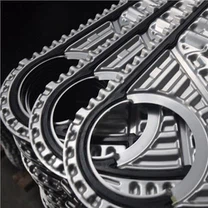
Water-cooled condenser: The heat of the refrigerant in the condenser is taken away by the cooling water. The cooling water can flow once or be recycled. When recycled, a cooling tower or cooling pool is required. Water-cooled condenser is divided into several types such as shell and tube, casing type, plate type and spiral plate type.
Air-cooled condenser: The heat released by the refrigerant in the condenser is taken away by the air, and the refrigerant is condensed in the tube. There are natural convection air-cooled condenser and forced convection air-cooled condenser in this type of condenser. Usually, air-cooled condensers are also called air-cooled condensers.
Water and air joint cooling condenser: the heat released by the refrigerant in the condenser is taken away by the cooling water and air at the same time, and the cooling water absorbs the latent heat of vaporization when it is sprayed and evaporated outside the tube, so as to make the refrigerant inside the tube cool and condense, and therefore consume less water. There are two types of condenser: shower condenser and evaporative condenser.
3.evaporator
The role of the evaporator is to use the liquid low-temperature refrigerant at low pressure is easy to evaporate, transformed into vapor and absorb the heat of the cooled medium, to achieve the purpose of refrigeration.
Types of evaporator: evaporator according to the different cooling medium, is divided into cooling liquid refrigerant, cooling air or other gases of the two types.
In the evaporator for cooling liquid refrigerant, there are water tank type (immersed type) evaporator (including vertical tube type, spiral tube type, snake type), plate evaporator, spiral plate evaporator, shell and tube evaporator (including horizontal evaporator, dry evaporator) and so on.
Among the cooling air evaporators, there are fin evaporators for air conditioning, air-air coolers (chillers) for refrigeration and freezing and tube evaporators.
4.throttle mechanism
Make the condenser out of high-pressure liquid throttling pressure, so that the liquid refrigerant in the low-pressure (low temperature) under the vaporization of heat absorption. Therefore, it is to maintain the condenser for high-pressure, evaporator for low-pressure important parts.
Throttling components according to the form, can be divided into capillary tube and expansion valve, capillary tube used in smaller refrigeration equipment, such as refrigerators installed in the condenser and evaporator between the capillary tube that is one of the throttling mechanism.
Expansion valves are used in larger refrigeration equipment, and the throttling mechanism applied in large and medium-sized installations is the throttle valve, and there are three types of commonly used throttling valves, i.e., manual expansion valves, float regulating valves and thermal expansion valves, with the latter two types of throttling valves for automatic adjustment. Expansion valves can be divided into electronic expansion valves and thermal expansion valves according to the type of expansion.
5.Gas-liquid separator
Gas-liquid separator installed with the inlet end of the compressor, mainly to prevent the return to the compressor of low-pressure low-temperature vapor carrying too many droplets, to prevent the liquid refrigerant into the compressor cylinder, to prevent liquid shock, the separator at the same time has the function of filtration, back to the oil, liquid storage and so on.
The gas-liquid separator should be used with attention to:
1, as close as possible to the compressor;
2, in the reversing system, the gas-liquid separator should be installed between the reversing valve and the compressor;
3, the correct installation of the inlet (from the evaporator) outlet (go to the compressor suction port);
4, must be installed upwards;
5, the appropriate size of the gas-liquid separator interface is not necessarily the same as the compressor suction port.
6. Fan
Fans are AC single and three phase induction motors combined with impellers.
Fans are categorized into axial flow fans and centrifugal fans.
Fans include two series: fixed speed and variable speed.
Fans are categorized into metal air blades, plastic air blades and metal cast air blades, etc. There are various types of blades.
7. Liquid Reservoir
Refrigeration system in the high-pressure liquid storage (also known as liquid storage cylinder) is installed between the condenser and the expansion valve, its function can be summarized in several aspects:
Storage of condensate condensate: to avoid the condensate in the condenser to accumulate too much and make the heat transfer area becomes smaller, affecting the heat transfer effect of the condenser.
Adapting to the demand of supply quantity by the load change of the evaporator: when the evaporating load increases, the supply quantity also increases, and is replenished by the stock of liquid in the liquid storage tank; when the load becomes small, the quantity of liquid needed also becomes small, and the excess liquid is stored in the liquid storage tank.
As a liquid seal between the high and low pressure sides of the system: because the liquid outlet pipe is inserted under the liquid surface, it prevents the vapors and non-condensable gases on the high pressure side from entering the low pressure side. At the same time, the reservoir also plays the role of filtration and muffling.
There are various forms of reservoirs, including unidirectional and bidirectional; vertical and horizontal.