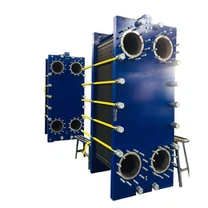
1.Is your plate heat exchanger overworked?
Let's start with the most common cause of leaks: fatigue operation.A plate heat exchanger is not Iron Man-it has a limit to its pressure resistance. Normal flow rate, temperature difference, and medium concentration are its comfort zone. Once exceeding the design parameters, the plates will endure long-term high-frequency and high- pressure vibration, leading to wear, compression, and fatigue aging.
What's this like?It's like wearing a perfectly fitting pair of sneakers. They're fine for daily walks, but if you insist on running a full marathon with heavy loads and keep wearing them for a week without replacement, the soles will inevitably come unglued sooner or later.
Especially in some scenarios, users arbitrarily raise the temperature difference and increase flow rate to get more heat output, forcing the plates to operate beyond their capacity. The gasket grooves get frequently compressed and deformed, resulting in sudden leaks-yet people mistakenly blame poor plate quality.
2. Have You Noticed the "Clues" Before a Leak Occurs?
A plate heat exchanger is quite intelligent-it will send you warning signs before a leak breaks out.Unfortunately, most people overlook these subtle signals.
Signal 1: Dripping + Dampness + Rust SpotsIs the base of the unit getting damp? Are there unexpected water stains on the floor? Be careful-this is likely the start of minor gasket leakage, much like engine oil dripping from a car, indicating the seal may be aging.
Signal 2: Skyrocketing Pressure Differential & Declining Thermal EfficiencyWas the inlet/outlet pressure differential around 0.2 MPa, but now it has quietly risen to 0.35 MPa? Is the outlet temperature impossible to adjust properly?Don't ignore this-it means the plate gaps are clogged, water flow is restricted, and internal pressure is unbalanced. The plates will feel like they're "suffocating," just like someone wearing a hot, stuffy, and poorly ventilated mask.
Signal 3: Listen! The Unit Speaks to YouHas the previously steady, low operating noise become erratic, or even started making "puffing" sounds?This is a sign of internal air accumulation, clogging, and vibration-similar to a car's exhaust pipe suddenly making puffing noises, a visible symptom of "internal damage."
3. The Real Culprits: Gaskets and Plates, the "Doomed Pair"
Gasket aging is the starting point of all problems.The sealing performance of a plate heat exchanger relies entirely on the gaskets. Soft and fragile, they are tasked to withstand high temperature, high pressure, and high corrosion.Once gaskets lose elasticity, harden, or crack on the surface, they become like a car door that won't seal properly-no longer able to keep out wind and water.Some enterprises avoid the hassle of replacing old gaskets and only act when leakage becomes severe.This is like enduring a toothache until facial paralysis sets in before pulling the tooth-too late, the root is already damaged.
Plate damage is a serious "structural injury."As the core heat-transfer component, plates should be smooth, clean, and with clear patterns. However, in reality:
Covered by fouling: heat transfer is blocked and pressure rises
Pitted by corrosion: leakage and perforation are inevitable
Bent by high-pressure impact: poor sealing contact on sealing surfaces
4. The Real Solution: Not Quick Fixes, but Proactive Intervention
After covering so many issues, the answer is simple - don't wait for leaks to repair them. Leakage is only the symptom; the root cause is lacking these 3 maintenance steps:
First, regular gasket aging assessmentDon't wait until they turn brittle and crumble to replace them! Use a tactile + elasticity test every 6 months:If they feel hard and no longer bounce back when squeezed, it's time to replace them. Never keep running them to failure.
Second, regular plate disassembly, cleaning and inspectionA quick soak in cleaning solution is not enough! For professional cleaning, analyze the fouling type, select the proper cleaning agent, and control temperature, concentration and flushing time to ensure thorough cleaning without damaging the plates.
Third, establish a data monitoring logRecord daily changes in pressure, temperature difference and flow rate. Like a doctor checking a temperature chart, you can spot major issues early from small data fluctuations.