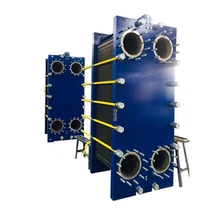
How to maintain the plate heat exchanger gasket to ensure that it works properly
In process industry equipment, plate heat exchanger is a kind of equipment with high security requirements. When the gasket is damaged, the external drip is visible. Heat exchangers and heat exchangers will have slight leakage at the beginning, and in the process equipment with large pressure impact, large leakage may occur due to the damage of the sealing pad.
Even plate heat exchanger, there will be problems in the course of use in a year, the need to repair, especially its seals, to see if it has been loose. This paper will introduce the points for attention in the maintenance of plate heat exchanger gasket.
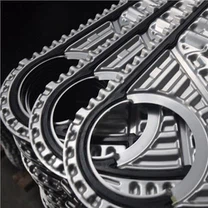
Plate heat exchanger is an important part in the heat exchange technology of process industrial equipment. The elastic gaskets sealed between each plate heat sink are a kind of vulnerable parts, and under natural conditions are also a kind of easy to aging parts.
Its service life has an important impact on the service life of plate heat exchanger. If these seals are hardened and lose the original elasticity, the heat exchanger can not work normally.
The following factors have an important impact on the service life of the elastic gasket:
■ Working mode of heat exchanger (continuous or discontinuous)
■ Corrosivity of cooling media and cleaning agents used
■ Maximum operating temperature
■ Maximum working pressure
■ Stress of elastic gasket is greater due to excessive pressure and unbalanced pressure
■ Natural aging
The softening of elastic gaskets is related to pressure and temperature. When the gasket loses its elasticity, the heat exchanger will leak.
In some products, in order to solve the drip phenomenon caused by the aging of the sealing pad, allow to adjust the sealing performance of the heat exchanger, that is, tighten the bolt of the combined plate heat exchanger again, adjust the compression force of the elastic sealing pad between each heat exchanger, to solve the drip problem. On the plates of heat exchangers with this function, the maximum and minimum allowable stresses are generally given.
For the new heat exchanger sheet sets, the minimum allowable stress should be used for connection and fixing. Depending on the number of heat exchanger sheets in each set, the tightening force of the heat exchanger can be adjusted once or many times. Each tightening, you can screw the nut in 3mm, and always pay attention to the stress of the regulating plate during the tightening process. Moreover, only the heat exchanger without working pressure is allowed to adjust the tightening force at room temperature to prevent dripping.
For the plate heat exchanger whose stress regulation range is not given in the nameplate, the stress value is generally given in the part drawing. When tightening this type of plate heat exchanger, the tightening torque should not be lower than the value specified in the drawing in any case. Because it is related to the assembly quality and deformation of plate heat exchanger. When the tightening torque reaches the requirement of the specified value, the elastic gasket can be replaced in a planned way.
For plate heat exchangers used in neutralizing corrosive media of important production equipment, it is recommended to have a set of spare seals. When the warehouse temperature is 18℃, the seals of plate heat exchanger can be kept for about 3 years in transparent plastic packaging.
Fixation of seals
In principle, the fixing of seals can be divided into two categories: adhesive fixing and non-adhesive fixing. The shape of the gasket shall be consistent with the shape of the plate heat exchanger seal. It must be noted that the adhesive fixing method does not have any effect on the sealing function.
Non-adhesive seal
■ Alignment: Place the sealing ring in place
■ Put in: Make the sealing ring enter the sealing groove correctly
■ Press firmly: in a sealed tank. A groove structure with a decreasing cross section. So that the seal ring is positioned correctly
Adhesive type seal
According to the purpose of the gasket and sealing quality requirements, different manufacturers of blended sealant and non-blended sealant can be used. Prior to bonding, the remaining adhesive and the remaining gasket should be thoroughly removed from the bonding surface using steam airflow.
For the blending sealant bonding, the residual adhesive and the residual gasket on the bonding surface of plate heat exchanger must be burned out. For large quantities of bonding, a liquid nitrogen pool for freezing seals and a heating furnace for drying a plate heat exchanger with a sealing pad should be prepared at a heating temperature of 160℃. If possible, the plate heat exchanger shall be cleaned chemically to ensure that the gasket of the adhesive parts remaining in the joint surface of the plate heat exchanger is completely removed.
According to the bee chamber observation hole of plate heat exchanger to know whether the installation of the gasket is correct
The bonding surface of plate heat exchanger should be cleaned with chemical cleaners (such as acetone). Similarly, chemical cleaners must be used to remove the softener and anti-adhesion coating bonded on the sealing gasket, and the adhesive is applied in the middle of each bonding surface.
The width of the adhesive should be about the width of a match, depending on the width of the gasket. Then, use a brush to spread the adhesive evenly across the entire bonding surface to make full use of the entire bonding surface. According to the different types of adhesives, wait for a certain amount of ventilation and drying time, and then put in the sealing pad, the various plate heat exchangers are stacked together, tightened with a tensioning screw, or pressed on the stacked heat exchanger group with heavy weights.
The hardening time is about 8-20 hours depending on the type of adhesive. For blended adhesives, screw tension and furnace heating hardening must be carried out.