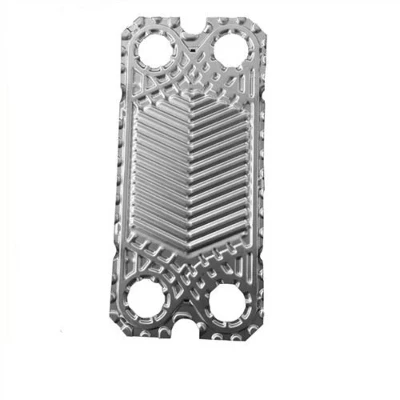
⒈ The selection and control parameters of the plate heat exchanger are heat exchanger material, working pressure, design temperature, etc.
⒉ When selecting a heat exchanger, try to make the side with the smaller heat transfer coefficient get a larger flow rate, and try to make the heat transfer coefficients on both sides of the two fluid heat exchange surfaces equal or similar to improve the heat transfer coefficient. The temperature of the fluid heated by the heat exchanger should be 10°C lower than the saturation temperature at the outlet pressure of the heat exchanger, and should be lower than the working temperature of the water pump used for the secondary water.
⒊ The fluid containing silt and dirt should be filtered and then enter the heat exchanger.
⒋ When selecting a plate heat exchanger, the flow velocity at the interface of the fluid on the side with the smaller temperature difference should not be too large, and it should be able to meet the pressure drop requirements.
⒌ For the case of large flow rate and low pressure drop, the plate type with low resistance should be selected, otherwise, the plate type with large resistance should be selected.
⒍ The detachable type or the electric welding type can be selected according to the fluid pressure and temperature.
⒎ It is not advisable to choose plates with too small veneer area, lest there are too many plates, the flow velocity between plates is too small, and the heat transfer coefficient is reduced.
⒏ The heat exchange medium of the plate heat exchanger should not be steam.