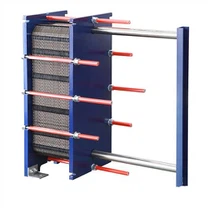
The focus of the quality management of the raw materials of the plate heat exchanger is to ensure the rationalisation, authenticity and traceability of the economic development of key parts and welding materials such as plates, sealing gaskets, clamping plates, architectures, positive middle partitions, clamping studs, flanges and buttresses, etc., which in turn ensure the quality and service life of the goods and the safety and stability of the goods.
The materials for the key components of the plate heat exchanger should be no less than the requirements of the national standard "Plate Heat Exchanger d-2009".
The quality management of raw materials should revolve around every aspect of acquisition, testing, management methods, production and processing, and engineering acceptance.
The following details the prevalent plate heat exchanger materials:
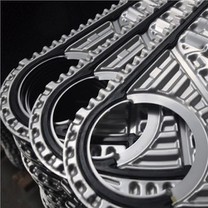
1, the plate piece: the selection of raw materials for the plate piece has a very great danger to the characteristics of the plate heat exchanger, working conditions, corrosion resistance, and use period.
The following are the prevalent plate sheet materials and application areas:
Stainless steel plate 304: suitable for purification of water, river water, vegetable oil, mineral oil and other liquids with not too high chloride ion content components;
Stainless steel plate 316: for purified water, river water, vegetable oils, mineral oils;
Stainless steel sheet SMO254: suitable for liquids with high chloride ion content components such as dilute hydrochloric acid, dilute salt industry material solutions, unclassified solutions, sea surface;
Nickel: for high temperature, high concentration anhydrous aluminium chloride;
Titanium alloy steel plate: suitable for sea surface, salt water, salt industry matter
Hastelloy C276/D205/B2G: applicable to sulphuric acid, sulphuric acid, ammonium sulphate, mixed acid and other amphoteric oxides.
2, Clamping plate (positive middle partition, architecture, end back cover): Q235A, Q235B, Q345B3,
Butt joint: 10, 20, stainless steel plate 304, 316, 321, titanium 4,
Flanges: Q235A, Q235B, Q345B, 20.
Stainless steel plate 304, 316, 321, titanium5,
Clamping studs: 35, 45, 40Cr6,
Pendulum: Q235A, 457,
Support: Q235A8,
Seal gaskets: The material of the seal gasket endangers the available temperature, heat transfer substance of the heat exchanger.
The following are common gasket materials and available heat transfer substances for heat exchangers:
Nitrile rubber NBR: available strong electrolytes, sea surface, mineral oil, cooking oil, alcohol, ethylene glycol, refrigerants containing alkyl benzene;
EPDM: water, vapours, acids, alkalis, NaOH;
Hydrogenated nitrile HNBR: high-temperature mineral oils, high-temperature water and NBR applications;
Fluorine rubber FKM: steam, high temperature oil, acid, alkali.
For raw materials of different composition and unique physical properties, according to the main parameters of the physical properties of heat transfer substances, processing process working conditions, appropriate, economic development and effective use of plate heat exchanger raw materials, not only to make the heat exchanger plate with excellent stamping mold characteristics, and in different heat transfer substances, heat exchanger raw materials as high as the corrosion resistance of chlorine, acid resistance, alkali resistance, etc..
The focus of the quality management of the raw materials of the plate heat exchanger is to ensure the rationalisation, authenticity and traceability of the economic development of the key parts and welding materials such as the plates, sealing gaskets, clamping plates, structures, positive middle partitions, clamping studs, flanges and buttresses, etc., thus ensuring the quality and service life of the goods and the safety and stability of the goods.